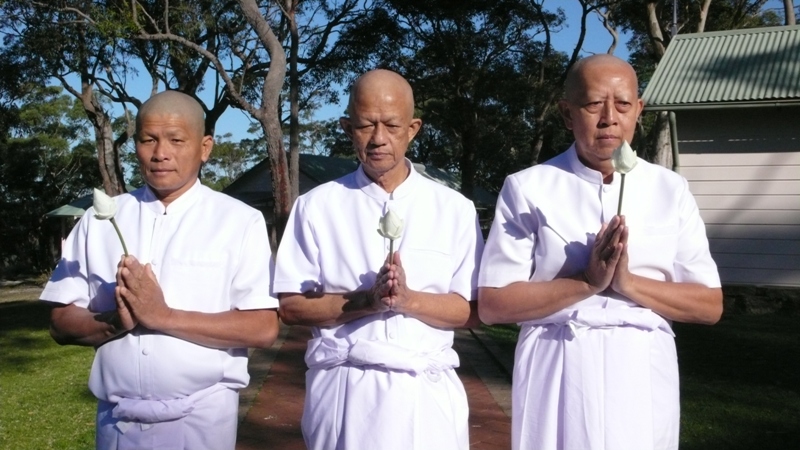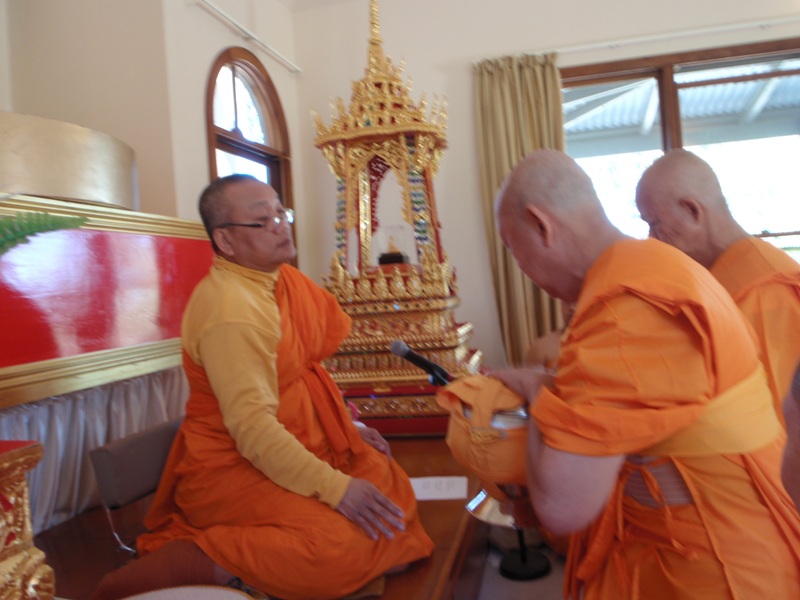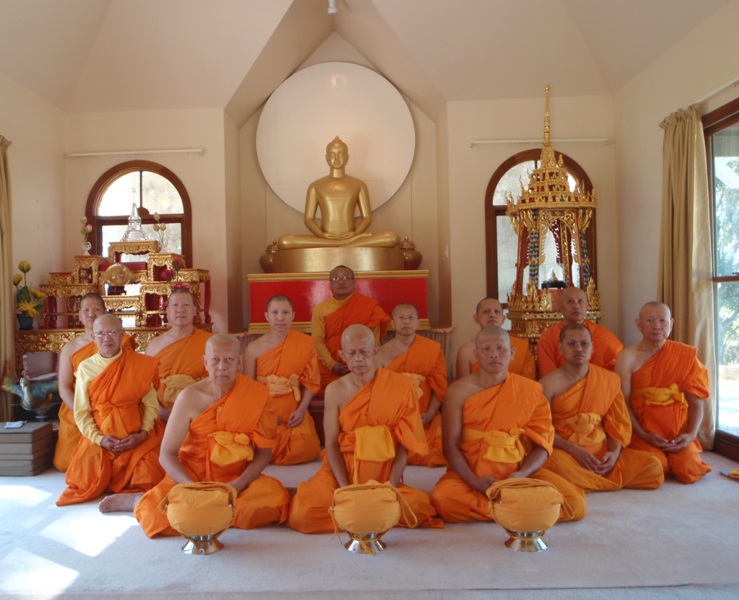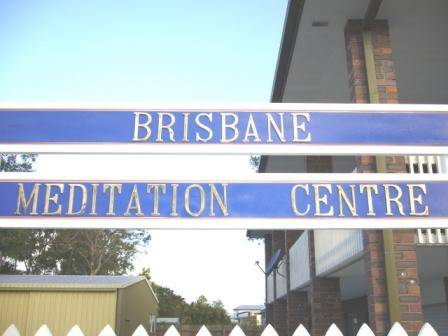
Wooloowins Local Alert to Come for the First One Day Middle Way Meditation Course

Posters, Flyers and signs caught the eyes of several people in the Wooloowin Area, attracting people  to  indulge in their curiosity and find something new.

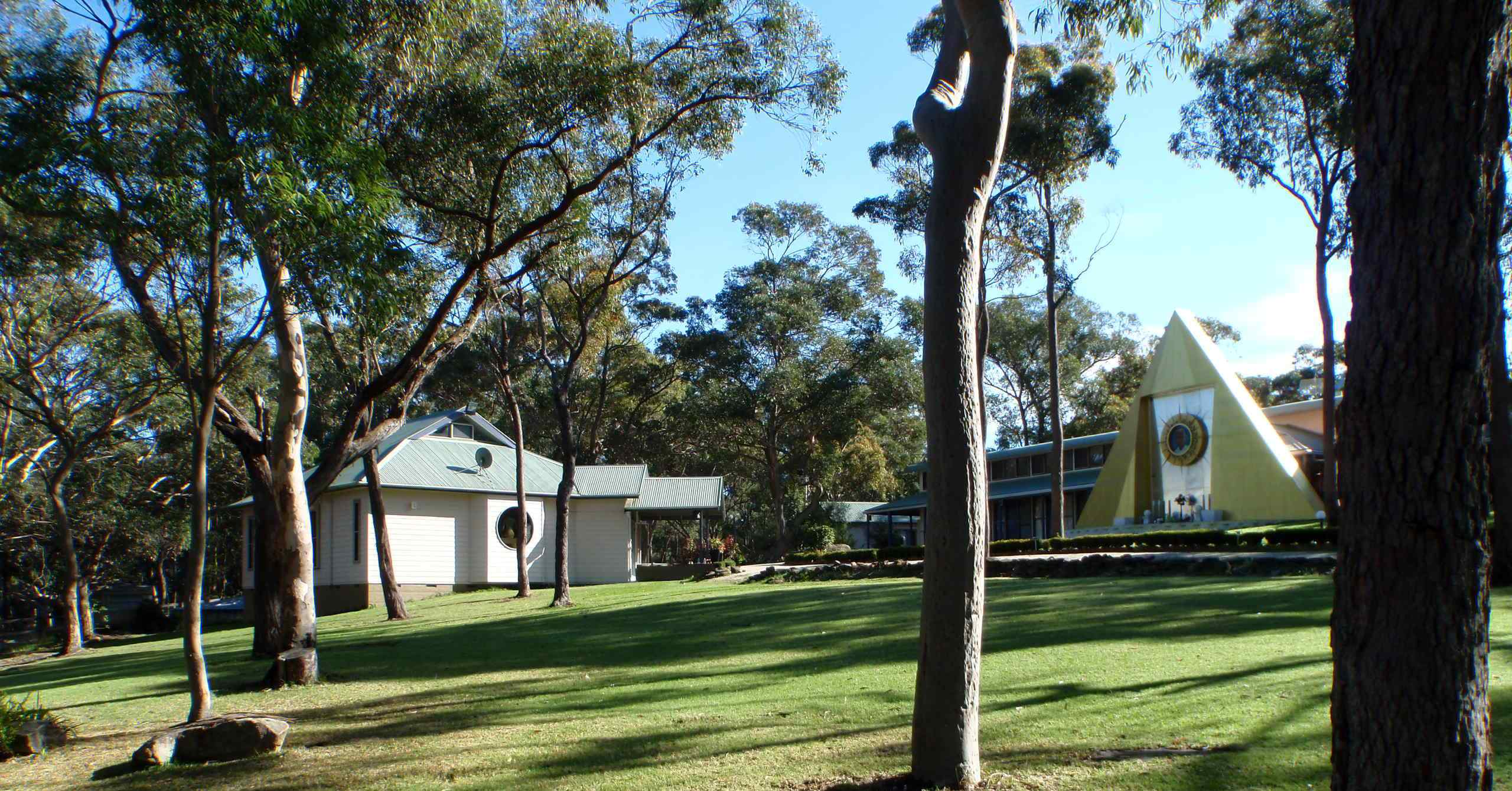
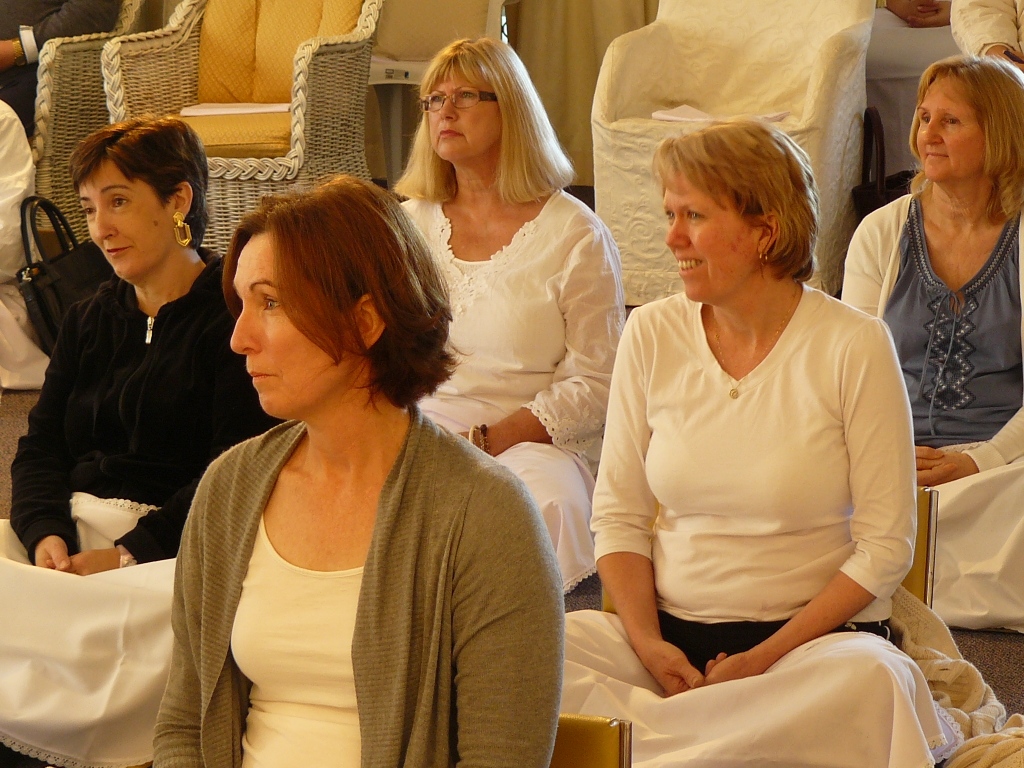
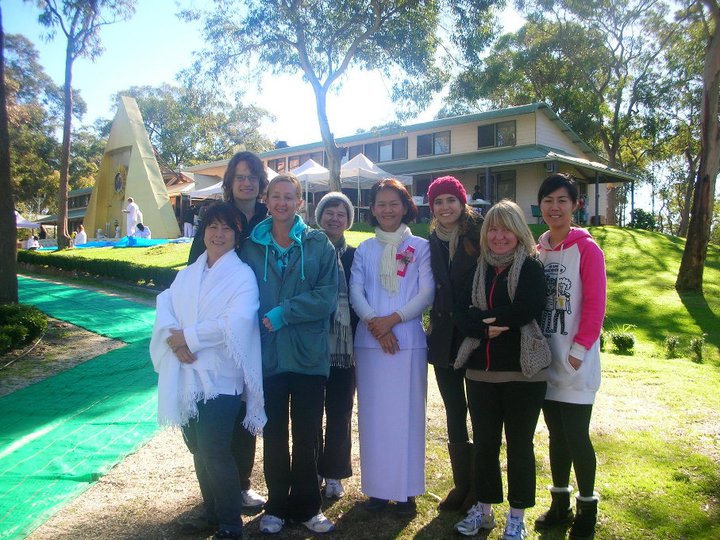
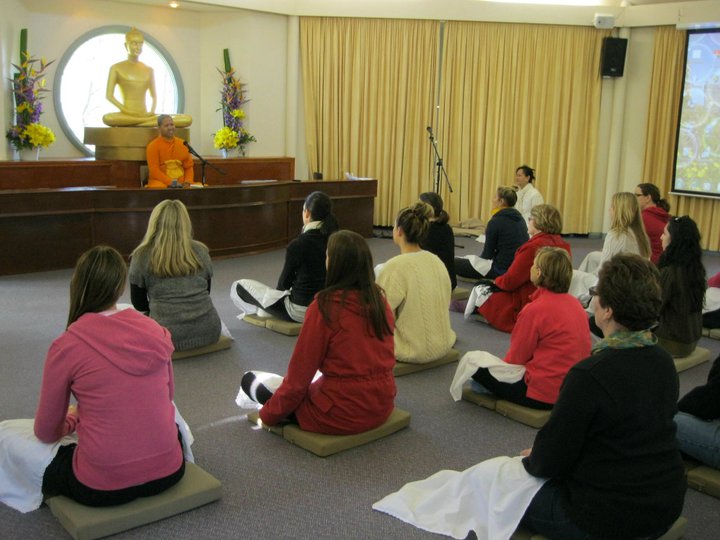
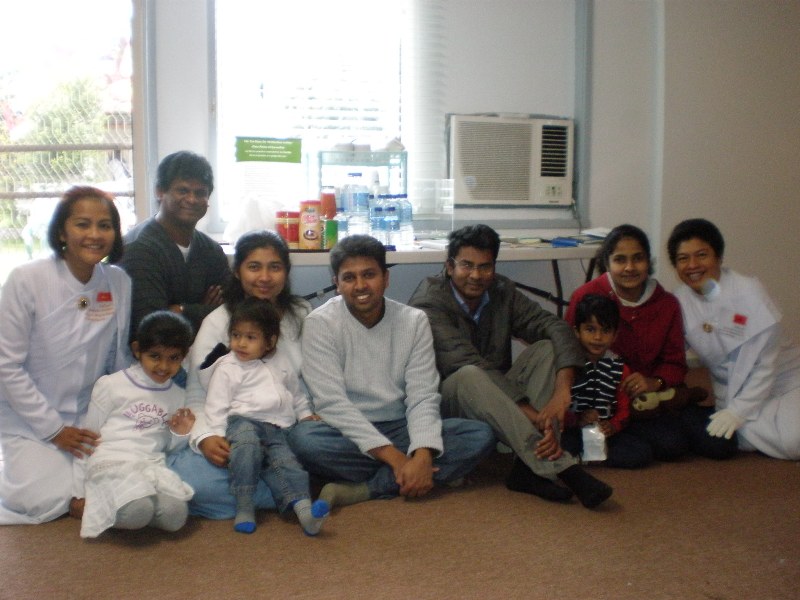
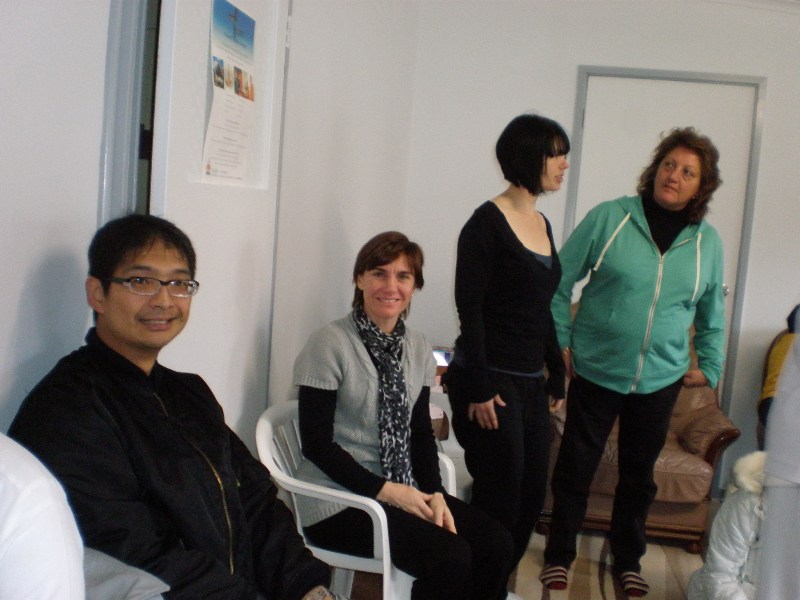
Many locals arrived at the meditation centre on the corner of Lodge and Shaw Road, Saturday 30th July.

Many people had previously passed the centre many times before but had never acted on their interest or turned up to explore what goes on at the centre.

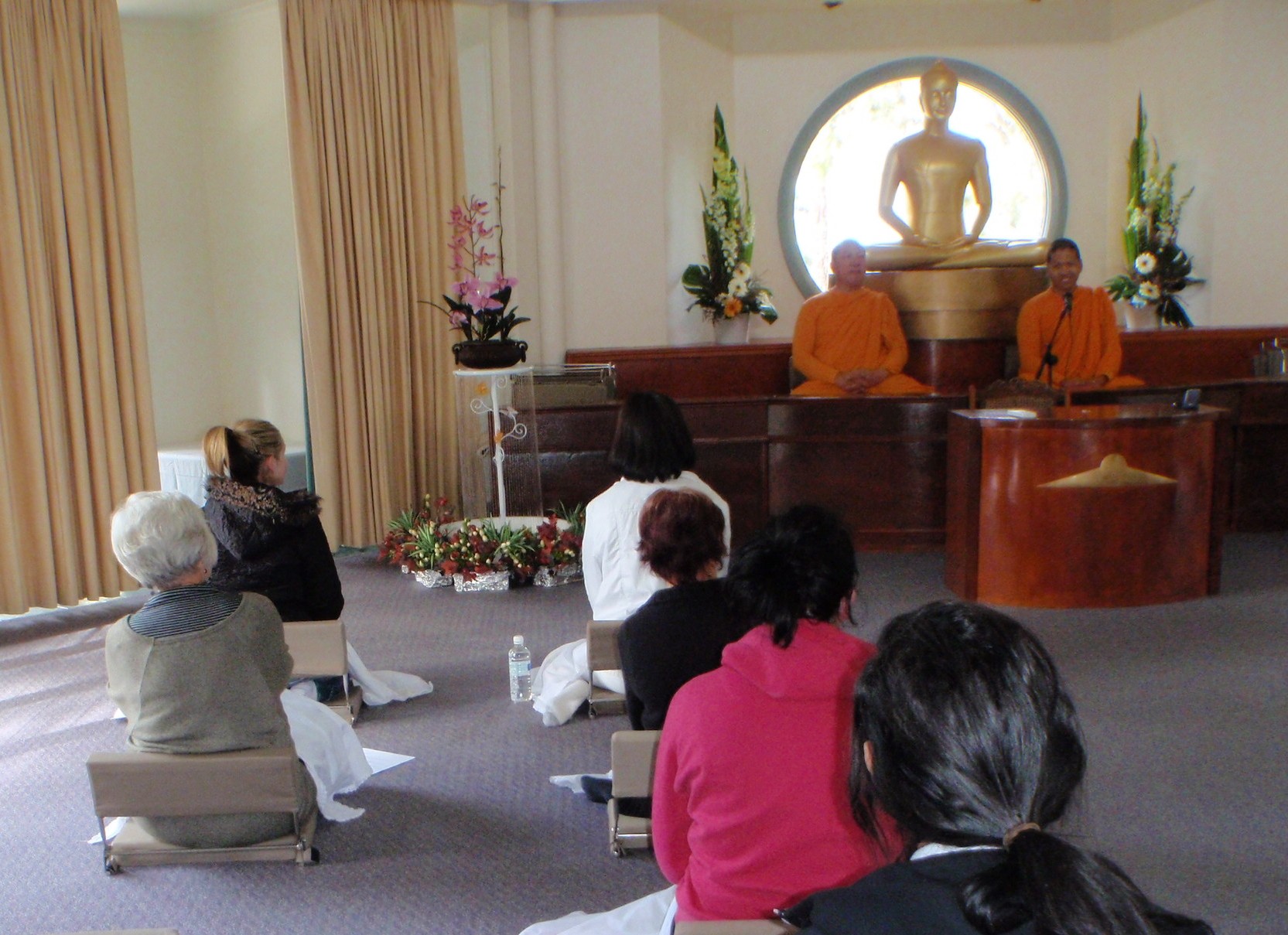
Smiling ‘Border Monk’, Phra Ahjarn Satit who travelled from afar to run the temple Wat Buddhavongsayaram in Albury on the New South Wales and Victoria border, guided the activities of the day as the teaching monk.

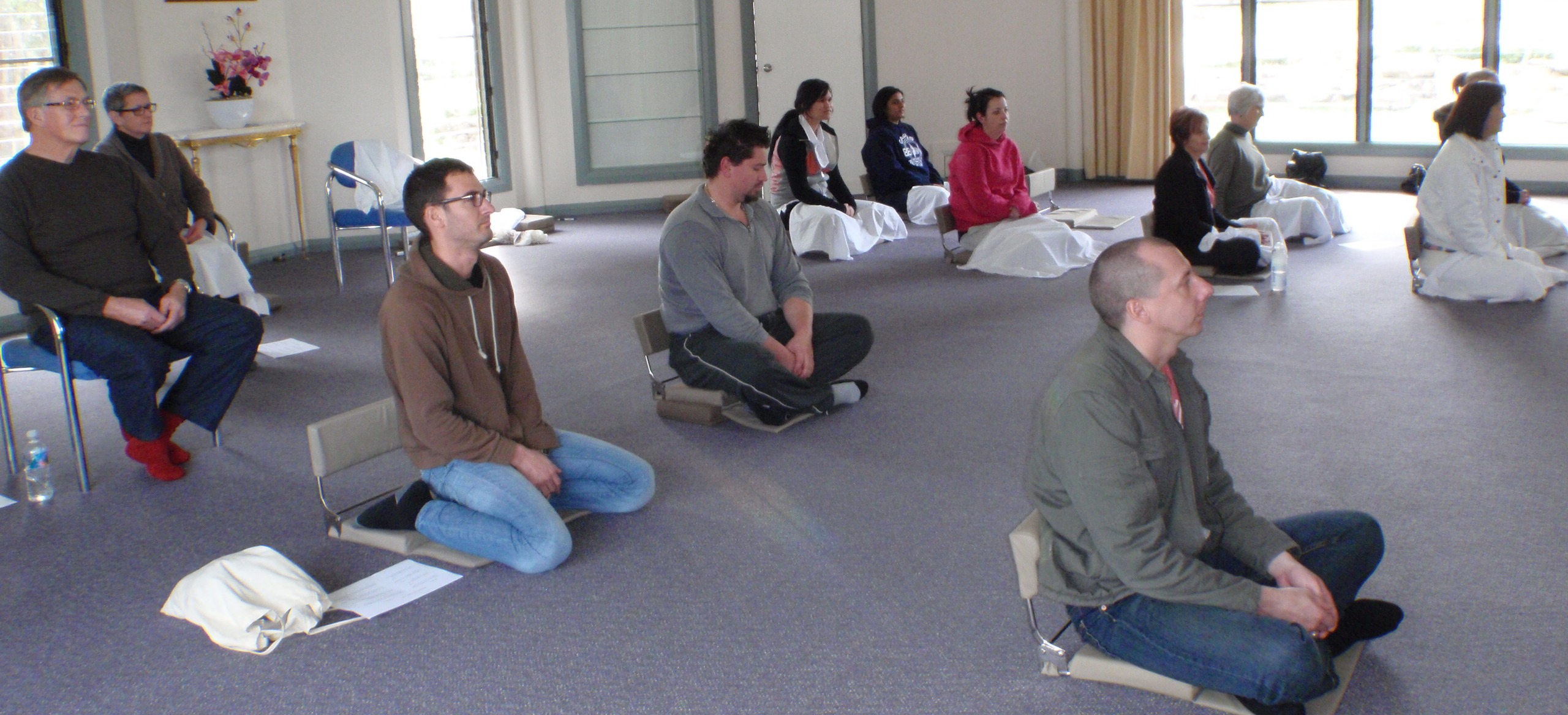
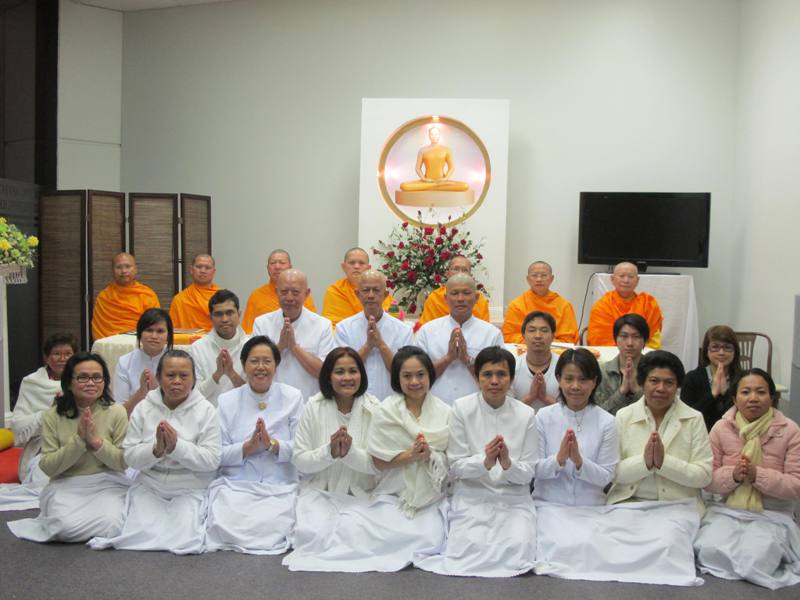
The group ranged from newcomers and beginners to well experienced meditators.

The Monk focused on the sharing of the meditation knowledge wthat has been passed down to him and took the group through the methods and techniques (the ‘Middle-Way’ Technique) taught by Wat Phra Dhammakaya, an organisation that is very well-known  worldwide.

People were personally guided by the monk and were able to converse freely with him. Phra Ahjarn Satit was able to ask each person about their needs, wants and difficulties. Because of this, he was able to analyse each problem or query in order to help each individual in adjusting small issues, helping them long-term rather than short-term.

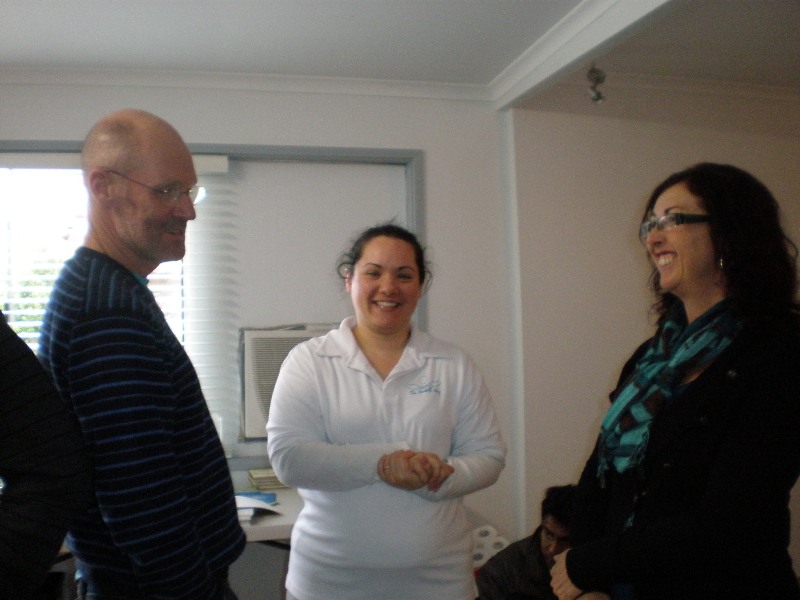
People complemented  Phra Ahjarn Satit on the way he shared the middle-way meditation knowledge and technique.

“Not one person did not smile throughout the whole day, he helped everyone to relax, doing so almost effortlessly”, said Jenny Binks.

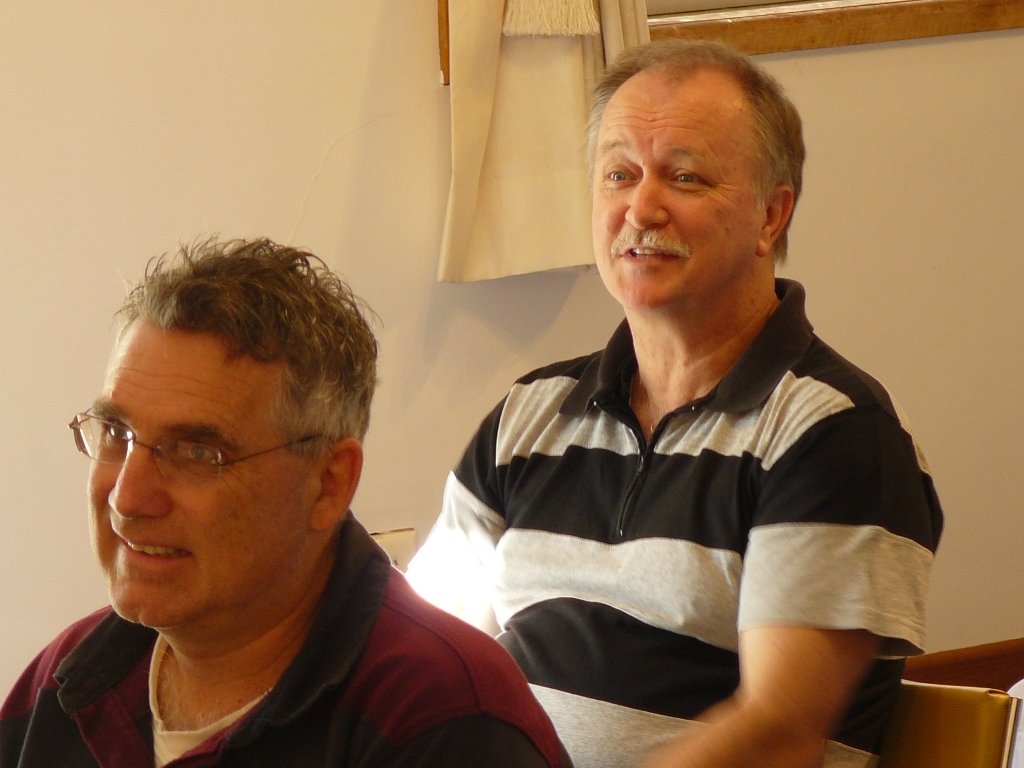
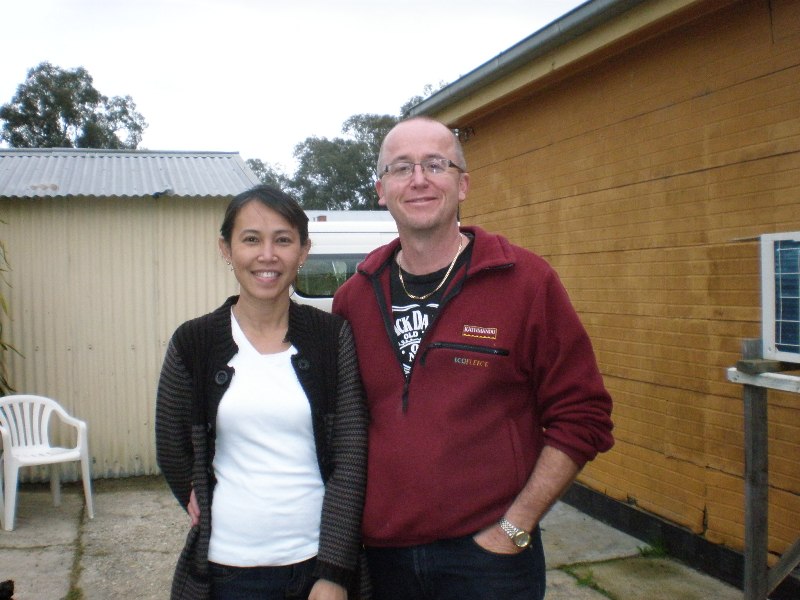
Alan Tilley, an experienced meditator for over 30 years and also a long time neighbour of the meditation centre, joined in the one day course.

For a long time Alan has been sharing the same fence with the meditation centre and was well aware of its existence. Although knowing about it, it was not until now that Mr Tilley had found enough interest to go and explore.

“I know what happens over there and I felt it was time for me to experience it for myself”, said Mr Tilley.

Alan also invited his wife to join him on the course because he had already been practicing meditation for so long and felt that it was time to let his wife be a part of that aspect of his life as well.

As could easily be witnessed by all, the cheerful attitude of all the participants had an effect on their good meditation outcomes. Some people arrived with unknown or limited expectations, but in the end they admitted that the course had exceeded their expectations.

Ultimately, there is only so much anyone could learn from a one day course, considering the time limitations, but the knowledge shared was most definitely valued by all.

Reporter: Namwan Boyce

Photographer: Sudham (Gao)

Photo Gallery: https://skydrive.live.com/redir.aspx?cid=e9f8a777d1ae08c5&page=play&resid=E9F8A777D1AE08C5!1975

Posted in National Buddhist News | Tagged , , , , | Leave a comment

Mr. Nantiya’s story

“Relatives and friends joyfully welcome the safe return of someone they haven’t seen for a long time. Similarly merit is waiting to greet a merit maker.”

Mr. Nantiya’s story

Once upon a time the parents of a young man of Banares city, Nantiya, wanted him to marry a young woman called Reavadee who lived opposite to their house. As Reavadee didn’t have faith in Buddhism Nantiya didn’t want to marry her.

Nantiya’s parents wanted him to marry the young girl so they asked Raevadee to take good care of the monks who came for lunch at their house by laying rugs, placing the bowls in the right places, inviting them to sit down and filtering drinking water for them. After their lunch she would wash their bowls. All this was to make believe that she had faith in the Triple Gem.

Raevadee wished to marry Nantiya, so she followed his parents’ request. Finally Nantiya agreed to marry her.

Eventually they had two children together. After Nantiya’s parents passed away Raevadee became head of the household.

Nantiya then donated even more and became a great sponsor to the monks and provided funds for orphans and travellers.

Later, after having heard the Buddha’s teaching about the fruit of merit from offering building construction, he built a hall that included four rooms. He fully furnished it and offered it to the Buddha.

Subsequently his celestial palace, including celestial retinues, arose and was waiting for him in the heaven.

One day the elder monk Phra Mogallana travelled to the heaven by means of his power and stood not far away from Nantiya’s palace.  The monk asked those celestial beings about the owner.

Those celestial beings said that the palace and retinues emerged for Nantiya who offered to the Buddha the great hall in Isipatana forest.

Female celestial retinues came down to greet the elder monk and said:” we were born here to attend to Mr Nantiya and it’s been a long wait, it’s so boring here. When you go back to the human realm, please tell him to let go of human wealth that is similar to a clay pot and to come and enjoy celestial wealth which is comparable to a golden pot.

Phra Mogallana came down to the human realm and asked the Lord Buddha about the possibilities of the arising of celestial wealth while the merit maker is still alive.

The Lord Buddha said “ Mogallana you have seen with your own eyes the celestial palace that emerged in heaven for Nantiya, so why do you still ask me?

The Buddha’s proverb was cited above.

Posted in Dhamma Stories | Leave a comment

The Middle Way Launching its First One Day Meditation Course in Brisbane

Originally based in Thailand, the name has become popularly familiar worldwide and has many centres, one of which is based in Sydney and has been operating for over 10 years. The Middle Way has decided to hold its first ever one day meditation course. For ten years the Middle Way has been holding weekend retreats.

The Middle Way team, now with three new members, two of which are qualified Middle Way Meditation Coaches (MMC’s). They, along with 29 other participants from 15 different countries under-went an intense three month training program, held in Thailand earlier this year.

Each MMC, over the period of the three month course were trained to learn the heart of Buddhism in theory and practice, including meditation practice, learning the goal of life, Buddhist teachings and culture. Each were trained the essential skills for there duty as an MMC and therefore hold the responsibility of being able to teach meditation on and off-site pilot project centres as well as to neighbouring countries.

At present the 2nd official MMC course is under way and end October 2nd. The 2ndcourse will be followed by two more training programs held in 2012; they are still awaiting applications from those who are interested.

(more info see http://www.themiddlewaymeditation.org)

Brisbane Meditation Centre requested that the course be held there. The Centre provides audio guided session to all people. Unfortunately Local Australians who are interested are unable to ask questions and receive an in depth answer as there are no coaches based there. It is only until now that there will be experienced meditation coaches to cater to their needs.

The meditation course will be lead by experienced Thai Buddhist Monks who speak fluent English. They teach in a way that is universal, modern and practical. The meditation method they use is the Middle Way meditation technique, one of the most ancient techniques of meditation in the world. Its simplicity, originality and effectiveness have made the Middle way method among the most popular meditation techniques in many countries i.e. Thailand, its international popularity is growing fast.

Middle way meditation is all about self-discovery, relaxation and purification of the mind. This meditation will have no conflict with any religion or creed, a way of meditating so that you can use it in your everyday activities that will create peace in your life. And also bring peace to the world.

Photo : https://skydrive.live.com/redir.aspx?cid=e9f8a777d1ae08c5&page=play&resid=E9F8A777D1AE08C5!1975

Posted in National Buddhist News | 1 Comment

A thousand Buddhists in the Heart of Sydney

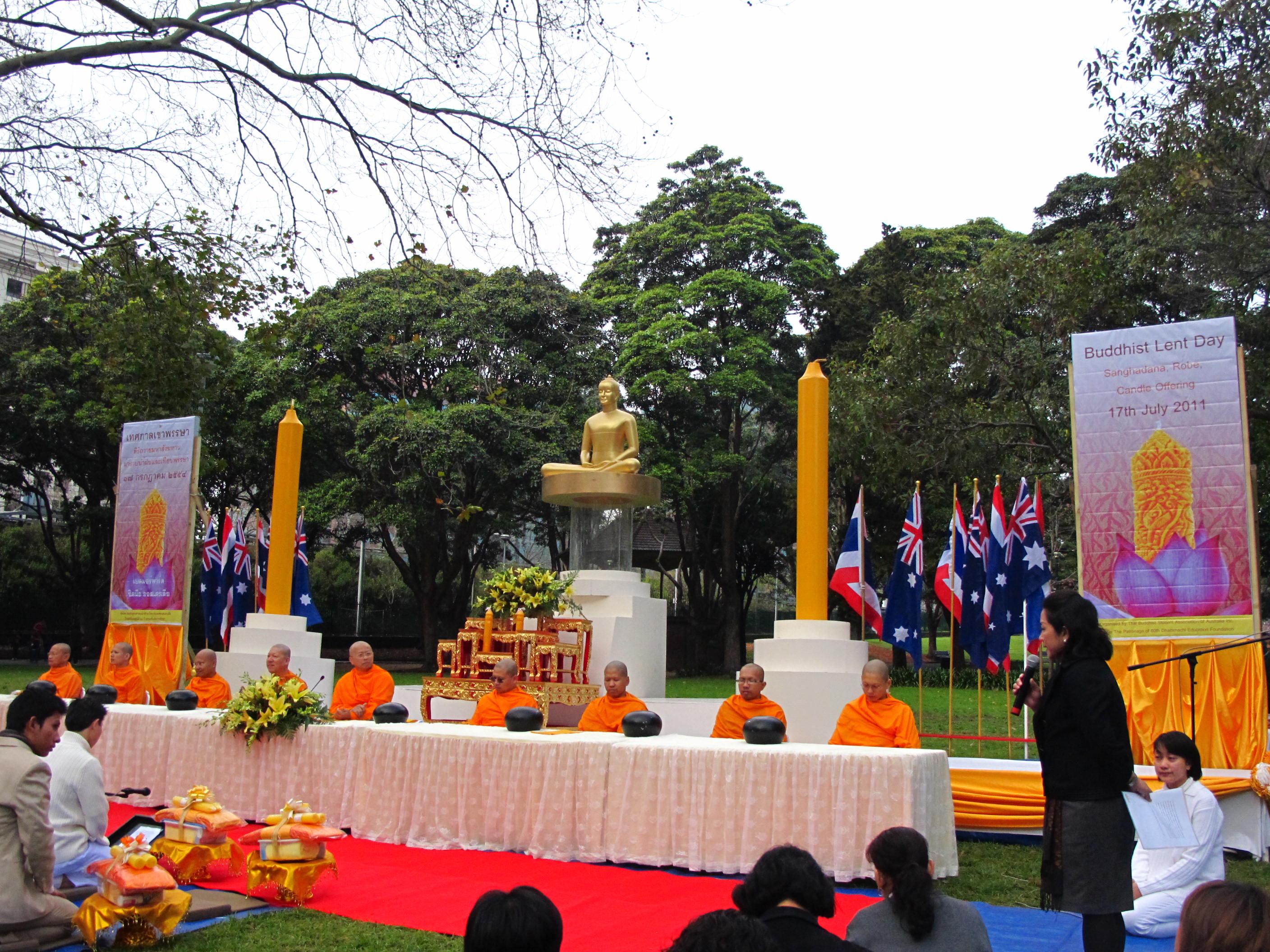
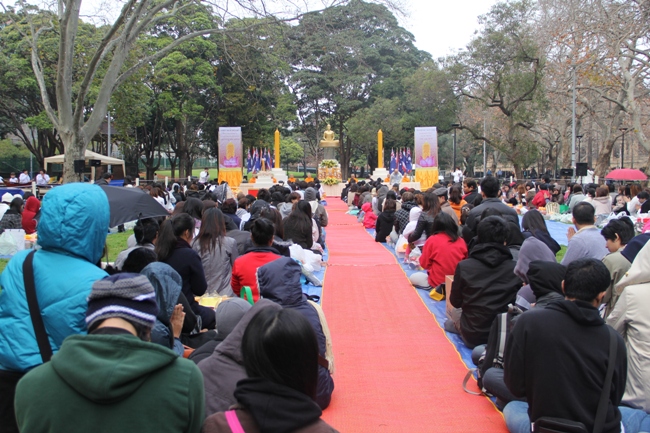
Pansa or Vassa, the time of Buddhist lent was filled with a warming atmosphere and the sound of graceful traditional Thai music. With its open and welcoming invitation for all to join, the Buddhist community of Sydney gathered in numbers at Belmore Park, Sydney on the morning of Sunday 17th July for the auspicious occasion. This event was organised by the Thai Buddhist Student Association of Australia.

Despite being over-shadowed by a mild overcast, people remained passionate about enduring throughout, hoping that the rain would not fall.

Nine monks from Wat Phra Dhammakaya, Sydney took part in the ceremony. The ceremony was led by the most Venerable Suddhammo (Phrakrupaladnayokvorawat), and was opened with Buddhist Chanting.

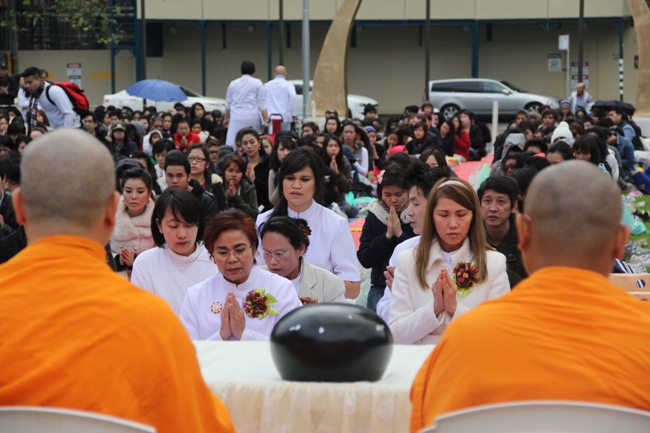
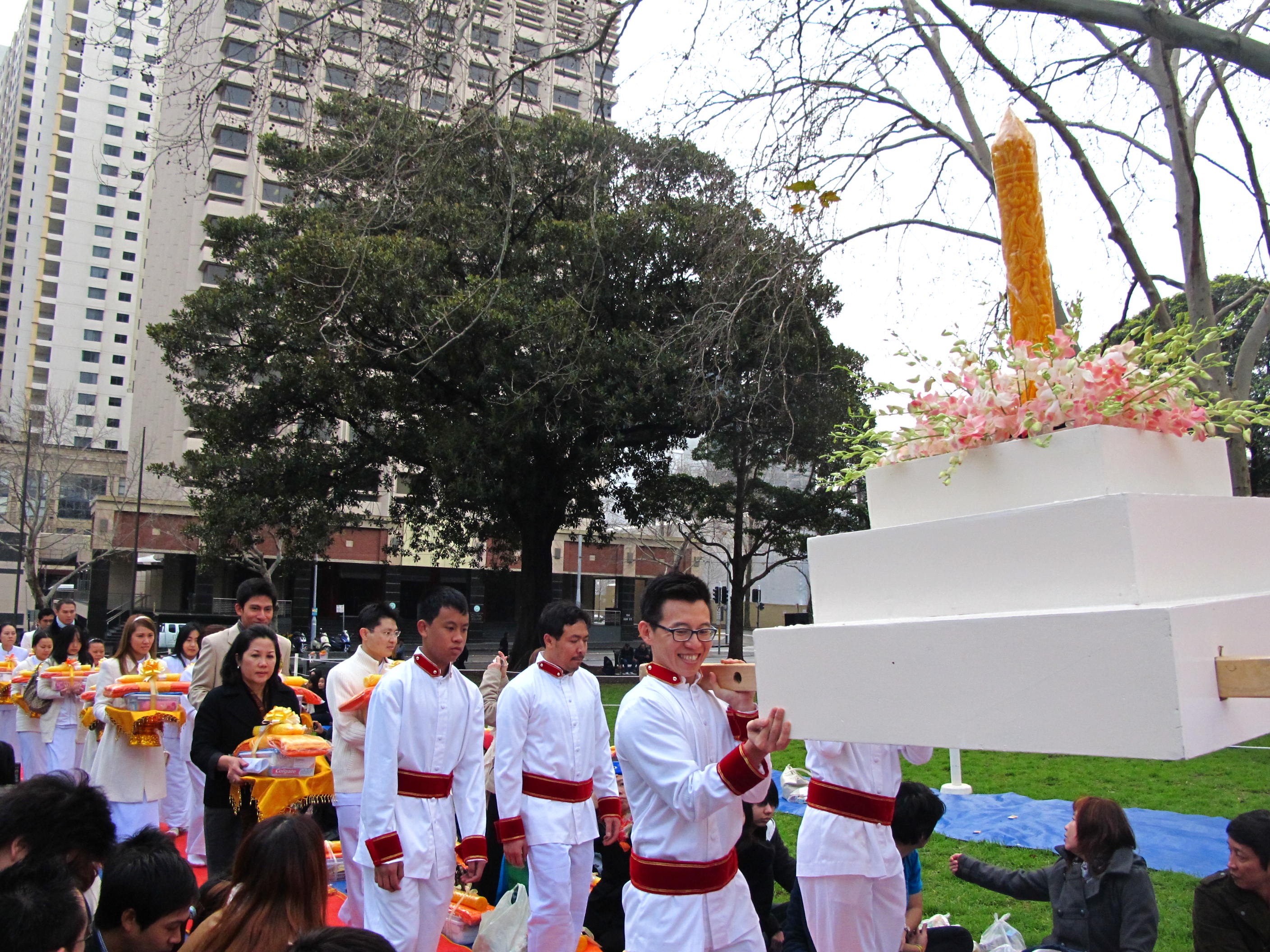
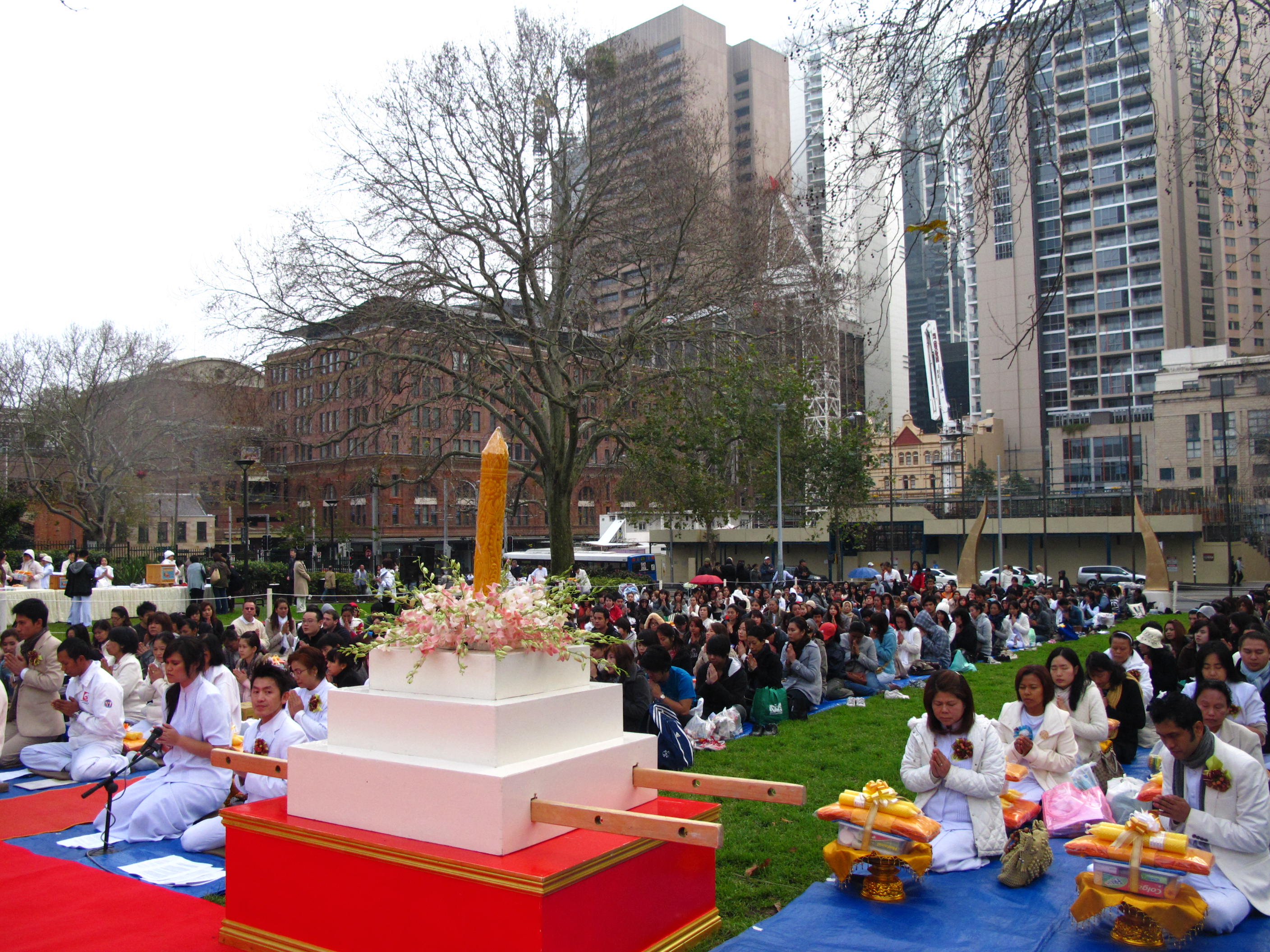
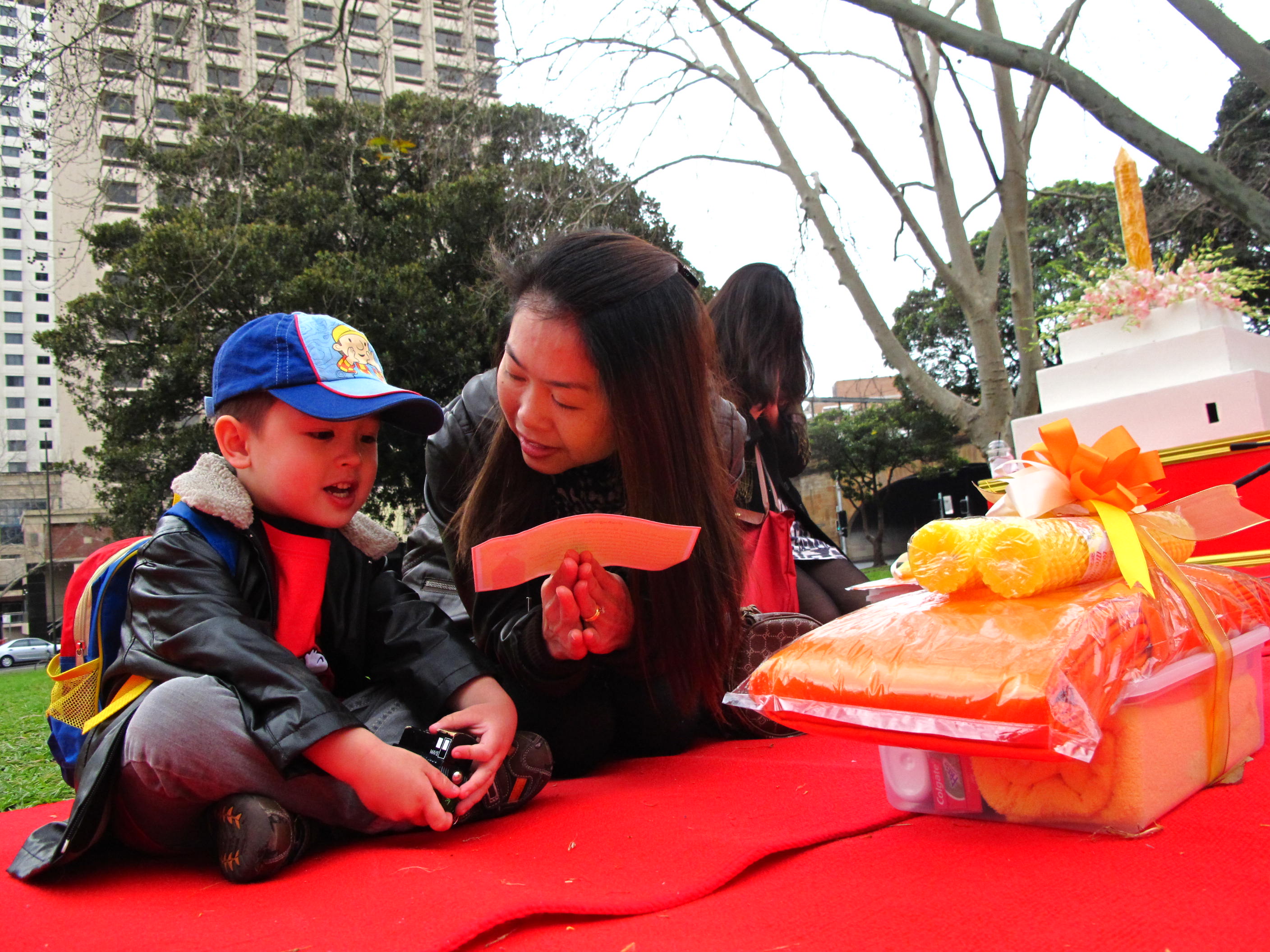
Belmore Park was appealing, decorated by flowers, orange supersized candles, and also other objects symbolic to this ceremony. Young ladies dressed in white created a pleasant feel as they walked the red path with beautifully arranged flowers and also the Large Candle (Pansa Candle) which was marched down by a group of young men, paying homage to the Lord Buddha during this time of lent.

As the sounds of the park surroundings faded into the voice of most Venerable Suddhammo, people sat in a harmonious and united manner while resting their minds at ease in meditation, aware that peace was present.

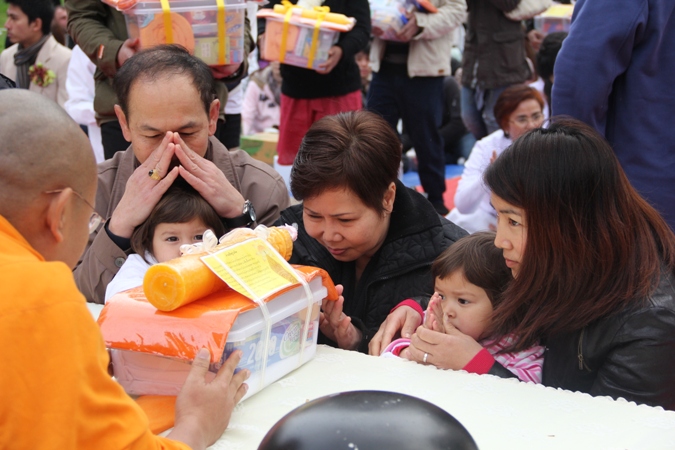
The ceremony continued accordingly with the offering of candles and Sangha Dana to the monastic community. It was easily witnessed by all that people were offering from their hearts; their faces shone. From that instant they were quiet until the procession of their gifts and they received a special blessing from a monk.

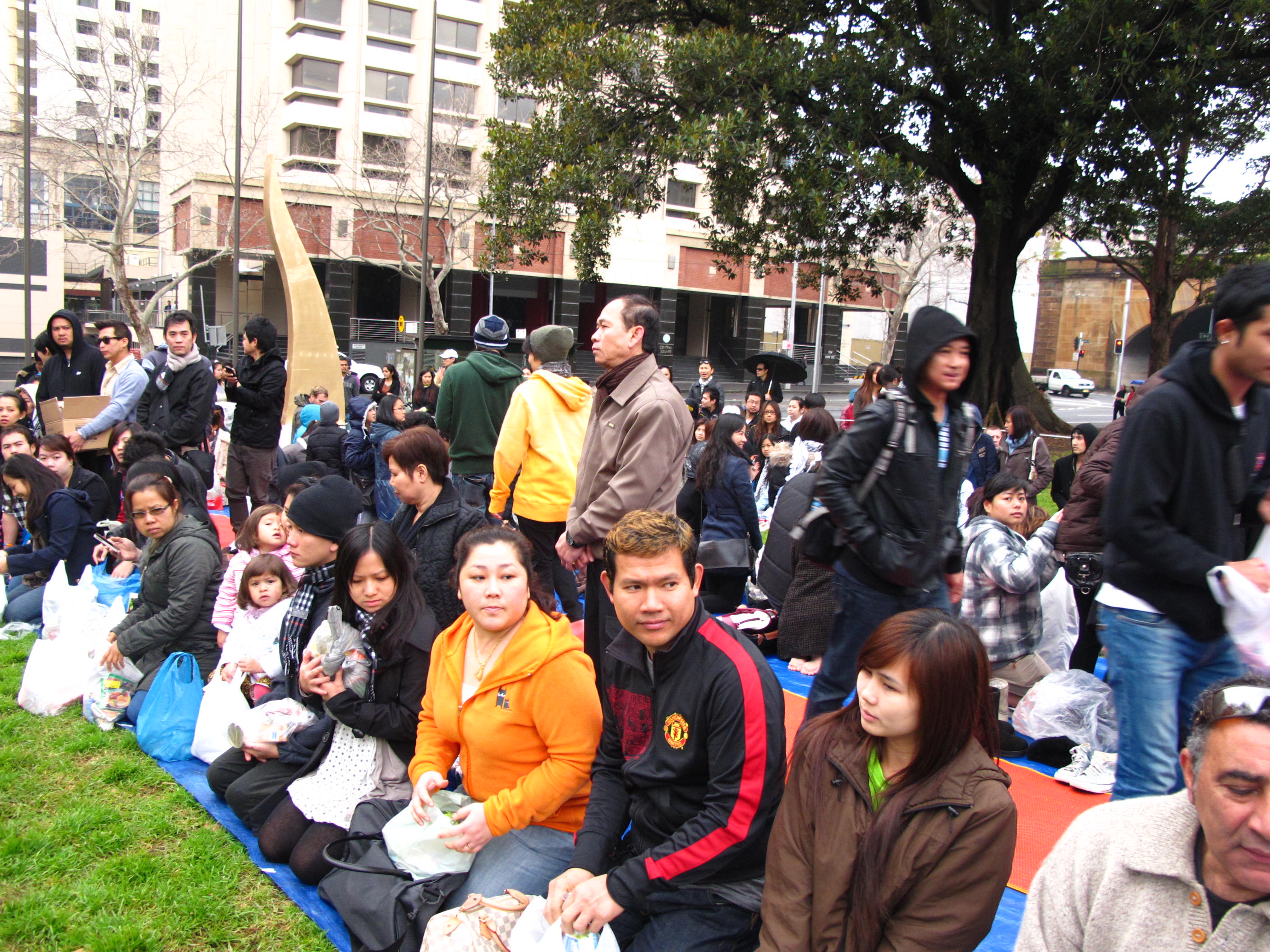
Once more, people united in meditation, while the flow of people arriving was continuous. The celebration had captured the attention of passers-by, as some may not have seen anything like it before, drawing them into this symbolic Buddhist ceremony.

Then the ceremony was followed by the second part, where lines of people waited enthusiastically for the monks as they slowly passed each person to receive their alms offerings (Takbat). To start with, some people were so eager in excitement to offer alms that they were unable to hold themselves back, fearful that the monks would miss them.

Passers by who were unaware of the event until passing, although both the candle offering and alms offering had already finished, were all eager to participate in the proceedings and in making offerings if they wished to do so.

As the event was coming to an end, the most Venerable Suddhammo and members of the Sangha concluded in giving a blessing to everyone present. The event was thoroughly enjoyed by all who united for Buddhist Lent. Even before the event had ended people were already sharing their happiness in creating merit along with their friends and with the new friends around them.

Reporter: Namwan Boyce

Video link http://youtu.be/K4tMPlcrpvU

Photo link https://skydrive.live.com/redir.aspx?cid=3a5c9e8a1078d95f&page=play&resid=3A5C9E8A1078D95F!138

Posted in National Buddhist News | Tagged | Leave a comment

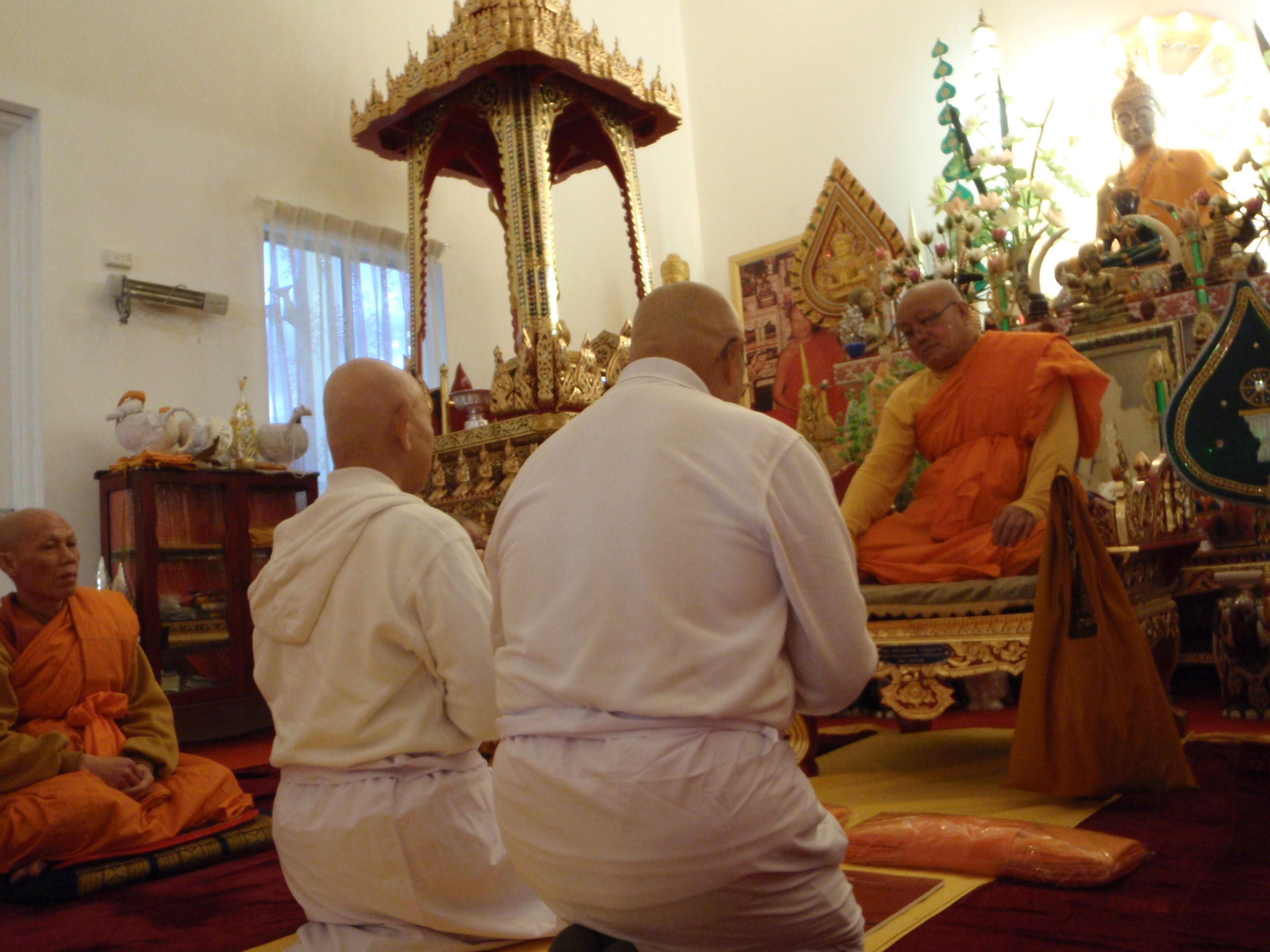
Two men took a vow in Buddhist ordination

On the full moon of Asalha Puja Day, two men took a vow in Buddhist ordination, one day before the Buddhist lent in Theravada Buddhist tradition started.

Retired Postdoctoral supervisor of Louisiana State University, Dr. Aroon (72), after joining in the MMC meditation program in Thailand for three months and also joining in Buddhist activities with the Dhammakaya centres, Texas (USA), Pathum Thani (Thailand) and Sydney (Australia), decided to adopt the practices and to request monastic life for the second time, 32 years after his first ordination, in search of a new experience. 

Vanchai (68), who had since been in Auckland, New Zealand less than a month after returning to a non-monastic life, from his three months ordination in Thailand, had readily decided to fulfil the wishes of the community in Auckland without hesitation and a positive assurance. The community wished to have five monks to stay over the period of Buddhist Lent in order to hold the Katina ceremony, which comes at the end of Vassa, the three month rains retreat. He joined the ordination in Sydney and flew back to accompany the other four monks in the Auckland centre.

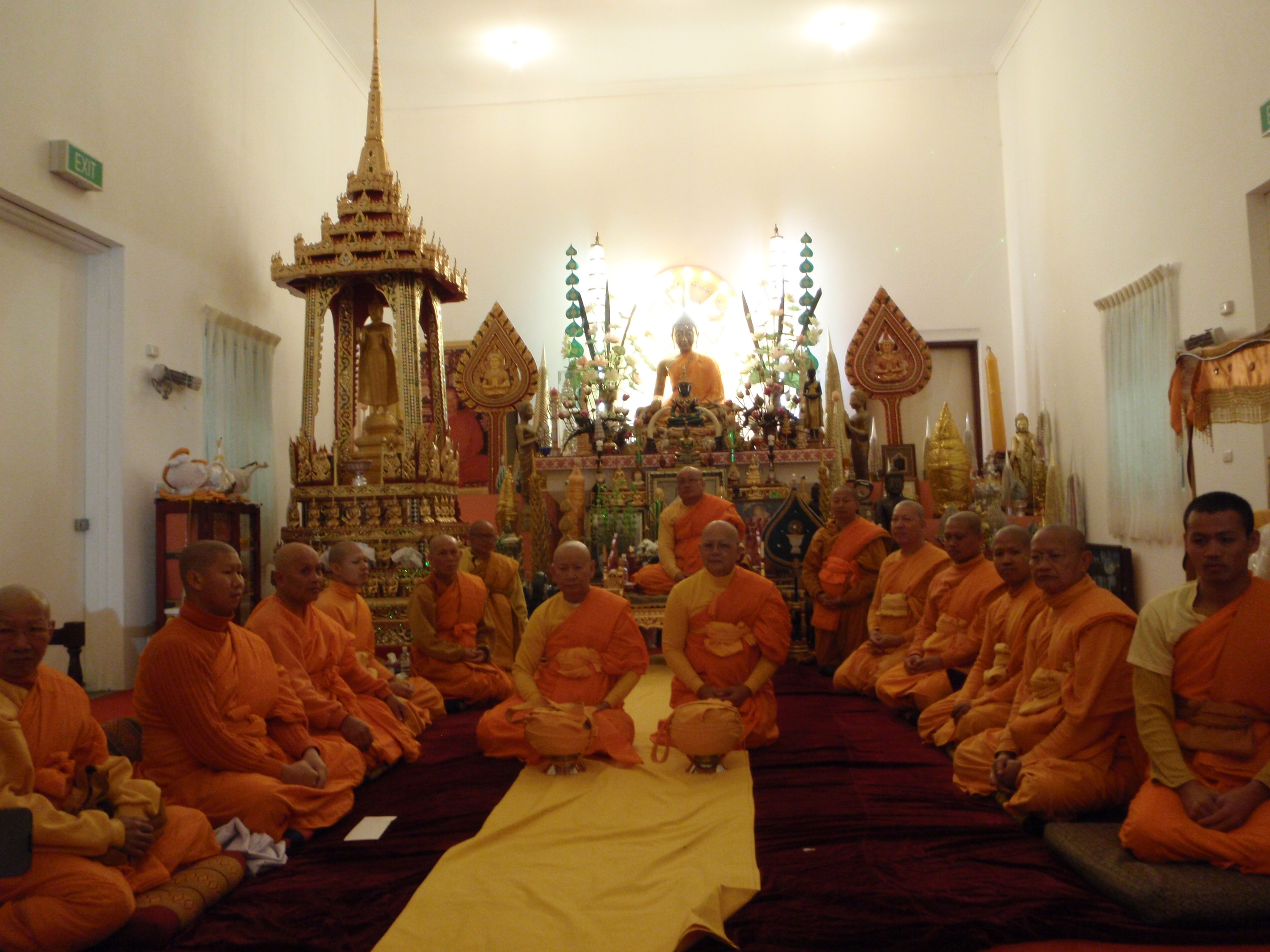
The ordination took place at Wat Prayortkeo Dhammayanaram, Sydney, July 15th, is the largest Lao Buddhist temple in Sydney or even perhaps in Australia. After the ordination the training of the newly ordained monks will be at Thai Temples, Wat Phra Dhammakaya, Sydney and Auckland. There is an appreciable harmonious relationship between the Thai and Lao Buddhist communities.

This is a special time to ordain as it is now the time of Buddhist lent. Men who ordain are able to learn about monastic life, experiencing new practices, the knowledge of life, inner peace. Perhaps this opportunity has helped them to realise they are able to live without materialistic goods in which they confide in, in search for short term happiness. If the ordinand intended to make it temporary he would be adept to applying spiritual knowledge into living life happily as a lay person. Granted that he has desideratum to maintain what has been learnt throughout the rest of laity life.

Reporter: Namwan Boyce

Video link: http://youtu.be/C9za0MucX-E

Posted in National Buddhist News | 1 Comment

Albury Buddhist Temple’s Big Boom!

An unexpected 40 people turn out at Wat Buddhavongsayaram, Albury. A big boom for the only Buddhist Temple in the region, 6 months after reopening.

Meditation Practice

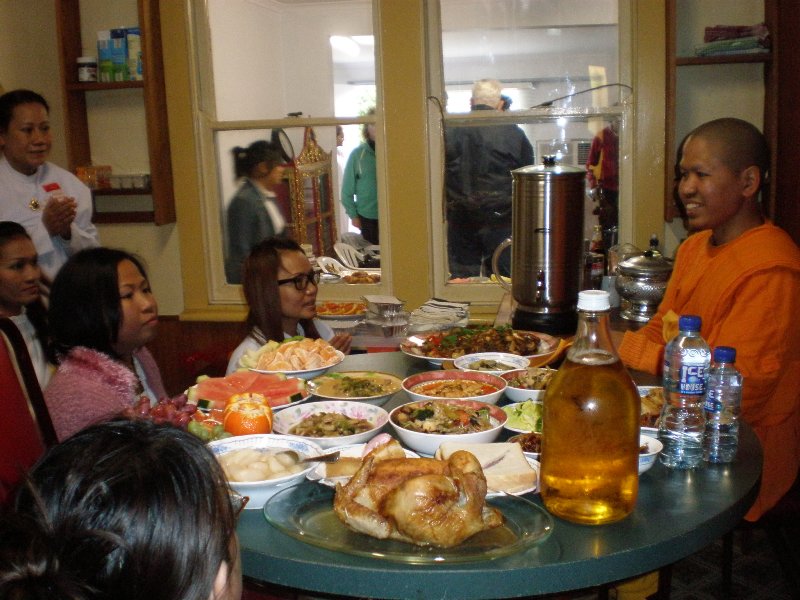
People travelled enthusiastically to offer food to the resident Monk, Ajahn Satit, on Sunday, July 3rd. They came from busy city-lifestyle places as far as Sydney and Melbourne to participate in the peace and quiet of smaller and serene Albury.

What is making this Buddhist Temple so impressive is that the companiable monks are now able to warmly accommodate the people’s needs by offering ceremonies and teachings in English.

The Buddhist Temple has been doing exceedingly well in keeping in mind the significance of equality. They are always deeply welcoming to those of all cultures and backgrounds, as is proved by all the diverse faces witnessed on the weekend, European-Australian, Sri-Lankan, Cambodian, Chinese Malaysian and Thai.

It is evident that the more people who are able to come and experience by participating in such events, the more they are able to share abundantly in it. Sharing and inviting by word of mouth has surely been the way forward to helping entice people’s interests.

Despite living in Melbourne and having several accessible Temples within his region, Dr. Tek Quinn Lim (of Chinese-Malaysian decent) willingly makes the trip to Albury to participate, followed by Mat Reid (a European-Australian who also speaks Thai). He is the owner of G.V Martial Arts Gym, and also an active member of the Temple who travels 2 hours by motorbike from Shepperton, VIC.

A resident of Albury appreciates attending the services; “I have been to the temple with my wife many times in the past. I used to enjoy the tradition but with little understanding about it. But today is different, the Monk speaks in English. It makes much more sense to me and I am able to understand the teaching” he said.

“The previous Sunday ceremonies were a bit more intimate in terms of having fewer people. The Monk (Ajahn Satit) is an excellent teacher. Whether there are just a few people or many, the meditation and Dharma talks are always insightful. Ajahn Satit is focused and friendly. I want to thank him for coming to Albury to teach. It was lovely this last Sunday to meet more people and to see how a traditional first Sunday of the month looks like. I felt very happy to be able to come.” said third time comer, Ebony Chapman from Albury who had moved from Sydney late last year.

Reporter: Namwan Boyce

Video link http://youtu.be/Wyce4uGF9Bw

Posted in Local News | 3 Comments

V-STAR has flashed it’s first initial program in Albury

The V-STAR program which has attracted a million young students in Thailand has now flashed it’s first initial program in Albury Australia. V-STAR is a program which aims to teach children the benefit of having good responsibility and about the results which sprout from doing good deeds. It is also an organisation which aims to award children for doing so, to show them that doing something good should be rewarded. It is the concept of giving children an insentive to remain motivated and enthusiastic about doing such things.

Jacob Cottier(10) of Lavington and Aewen Gilbert(8) of Albury

Jacob Cottier(10) of Lavington and Aewen Gilbert(8) of Albury achieved the awards. They proudly received their certificates and prizes on Sunday 3rd July afternoon at Albury Library Museum.

The V-Star photo competition, Albury, asking kids to post up photo’s of them doing good deeds in order to show the responsibility that they have for themselves, family and the society. Their photos were posted on, V-Star Albury – Facebook group. The photos posted were to be viewed by parents, friends and mentors. While they posted their own photo’s they were also able to learn from others.

Mrs Cottier (Mother of Jacob Cottier – 1st Prize Winner) said that since her son joined the program which ran for the duration of 30 days, Jacob continued keeping up with his progress on a daily basis, with enthusiasm and was always looking for more things to do or help out with. Even though the program has finished, he still continues with doing good work. “I have seen a huge change in him, a much more confident, helpful young man.”

“We live in a society that is so based on greed and the concept of, me first. One of the big things that we try to teach our children is to think of others. And the V-STAR program has really brought this value to the front.”

Said Mrs Gilbert, mother of lovely girl, Aewen Gilbert (2nd Prize Winner).

Ajahn Satit, the administrative monk at our local Buddhist temple on Abercorn St, South Albury who co-ordinated the program gave the statement, “It is a little spark of a good program for our young generation. We are looking forward to doing more in the very near future.”

Reporter: Udomson

Posted in Local News | 1 Comment

Buddhism, 2600 years on

Not being a student of the history of Buddhism, there is little I can say about the transmission of Buddhism from India to so many countries throughout Asia, and now to the remainder of the world, other than commenting on how remarkable this phenomenon is. To my mind, the flourishing of Buddhist philosophy, psychology, and practice within such a diversity of cultures is an indication that Buddhism must have something worthwhile and important for humankind in general, not just for the Indian people of two and a half thousand years ago. And so, in this talk, I wish to present, as well as I am able, my understanding of what it is about Buddhism that is so important for modern society.

I was raised without any religious background. I trained in medicine at the University of Melbourne during the so-called “mind-expanding” 1960’s, and my world-view was, and very much remains, scientific. I have found the Buddhist teachings to complement the ever-growing scientific world-view rather than contradict it. I worked in hospitals in Australia,New Guinea, and Englandand, after a brief term in aMelbournepsychiatric hospital, as a doctor, not as a patient, my interest in the mind and its potential grew strongly. It seemed to me that psychiatric diagnosis and treatment at the time, mostly drugs and shock therapy, was inadequate because we knew so little about the mind. But I didn’t know the answer. I wanted to know what the mind was; I wanted an explanation for the psychedelic experience; and I wanted to identify the causes of mental illness and why it was so prevalent in our society. As medical researchers understand, if we can identify the cause, we are well on the way to knowing the cure.

For me, Eastern philosophy, in the form of Taoism, had hinted at possible answers to these questions, and, almost accidentally, I began to explore Tibetan Buddhism in the early seventies at a one-month intensive meditation and instruction retreat at Kopan Monastery on a ridge over-looking Kathmanduvalley. My approach to these teachings was quite critical. Wary of unfounded dogma and outright superstition, during the month my fervently expressed doubts about topics such as reincarnation and karma elicited support from the sceptics and pity from the converted among the 200 other young Westerners attending the course. Two years later, when a converted American lady, who had sat in front of me during the course, saw me in monk’s robes, she did a great double-take: “YOU! In robes? I can’t believe it.” I had resolved my doubts about karma and reincarnation and, for myself, ordination as a Buddhist monk was the most logical step forward.

During that first course I was forced to put the concepts of reincarnation and karma on hold until I learned more. But I found Buddhist psychology to be instantly acceptable, simple, and precise in explaining the many questions I had about the mind and how it functioned. With insufficient time to go into the details, I shall try to paint the overall picture as I see it.

I will begin by briefly mentioning Sigmund Freud’s description of our psychological make-up because I feel it is an accurate description that may help us to understand Buddhism. Freud observed that we all possess innate, instinctive drives seeking pleasure. He called this the id, and he described the uncontrollable urge to seek happiness and avoid pain as the pleasure principle. Gratification or frustration of the pleasure principle, the most dominant feature of an infant’s mind, mostly occurs in the relationship between the infant and its mother. The pleasure principle persists throughout life, but is modified by what Freud called the reality principle – the demands of external reality. These necessitate postponement of immediate pleasure with the aim of greater pleasure in the long run.

The reality principle is an acquired function of mind closely related to maturation of ego functions. Freud explained that the self-identity, or ego, begins with the infant’s recognition of its own body as separate from the external world, and gradually evolves through resolution of conflict between the pleasure and the reality principles.

Resolution of the Oedipus complex that develops between the child and its parent of opposite sex, and rapid identification with the parent of same sex, gives rise to the superego, which confronts the other contents of the ego. The child’s struggles to repress instinctual aims are a form of renunciation, and this gives the superego a prohibiting aspect. Throughout life, we continue to identify with teachers, heroic figures, and admired persons, who form our moral standards, values, and ultimate aspirations and ideals. The standards, restrictions, commands, and punishments that were imposed by the parents from without are internalised in the superego, which then judges and guides our behaviour from within, even in the absence of the parents. This structure of the mind, along with the description of narcissistic, immature, neurotic, and mature ego-defence mechanisms is easily understood and is very much in accord with what the Buddha taught. The essential point that Freud missed is that we are all innately mistaken in our idea of self, of what we are, and this misconception is the root of all our problems.

Buddha stated the obvious: our minds are dominated by the powers of attraction to pleasant objects and pleasant experiences, and repulsion towards unpleasant objects and unpleasant experiences. We can accept this just by looking at our society: our day-to-day behaviour is dominated by seeking pleasure and avoiding displeasure. Unable to always get what we want, and avoid what we don’t want, our mood fluctuates between hope for good and dread for the unpleasant. But our hopes and our fears make us vulnerable. Conmen or conwomen easily talk us out of our wealth with false promises to fulfil our hopes; advertising agencies convince us that we can buy happiness; lotteries and other gambling institutions prey on our addiction to hope; the food and alcohol industries grow rich by promising happiness in packages and bottles; politicians appeal to our hopes with their promises and exploit our dreads by blaming their opponents for our troubles; and unscrupulous and misguided religious teachers, or political fanatics, exploit our hopes and our dreads by leading us on false paths where we give up our wealth, or even our lives, to feed their greed, their lust for power, or simply their sense of self-importance. The worst thing about hope and fear is that we tend to withdraw into a fantasy world and become isolated from others, which makes it more difficult to be happy. This may lead to our becoming lost in delusional and paranoid states.

There is nothing wrong in being happy and free from pain. All living beings, not just humans, desire, and have an equal right, to be happy and free from pain. The reality, however, is that we are not very successful in achieving what we want. Happiness is difficult to establish and, when found, it never lasts. Unhappiness is difficult to avoid, and it remains for a long time. Why is it that, despite our advances in technology, in material wealth, in medicine, in providing the physical comforts of life, and so on, most of us remain dissatisfied, anxious, depressed, and unhappy?

According to Buddhism, two types of ignorance are the underlying reasons for our lack of success in achieving what we want. These are ignorance of how things, especially the self, actually exist, and ignorance of karmic cause and effect.

Ignorance of the way things exist is not simply not-knowing how things exist in reality, but conceiving the opposite. This wrong idea is not something we have learned, we were born with it. With regard to our self, this ignorance is the mistaken idea that the self is an entity that exists in its own right, independent of the body and mind.

Buddha taught that, in reality, each of us is established to exist as an individual merely through the process of applying our name to our body and mind. In other words, our bodies and minds are empty of being the person, of being the abode of a self-existing person, and of being the possessions of an independent, self-existent person.

Just as a road sign bearing the name SYDNEY correctly points towards this city, but there is no findable thing, street, or place that is actually Sydney, our name correctly indicates our body and mind to be where our person is, but there is nothing findable within our body and mind that is actually our self, a ‘true me.’Sydneyexists and can be visited and experienced, but there is nothing which is Sydneyin its own right. Similarly, each of us exists and functions as an individual, but there is no self that exists in its own right. Thus, in Buddhism, “emptiness of self” does not mean there is no self; it means the self is established to exist merely through the labelling of “I,” or our name, upon the body and mind. Even though the merely-labelled “I” is empty of existing in its own right, and cannot be discovered by investigation, it is correct to say that whatever the body and mind do, the “I” does.

The problem is that, from the time we began to think, which occurred while still in our mother’s womb, we have cherished a false image of “I” projected by our innate misconception of self. We were born entirely self-centred, self-consciously frightened about the security of this imaginary self. For a while, it seemed to work; as babies we were treated as if we were the centre of the universe, just as we believed we were. Our demands for pleasure and to be free from what we didn’t like were fulfilled with loving care. The id and the pleasure principle were at work.

Then, as the reality principle gradually opposed the pleasure principle, our self-centred paradise was lost. But self-centredness remained and, upon the original mistaken self-image, we fabricated an ever-more complicated conception of self, believing all our good and bad attributes to be part of  a “true me.” In dependence upon this mistaken concept of self, there arose pride, longing desire, anger, jealousy, greed, spitefulness, a plethora of emotions that disturb the mind and are the foundation of our neuroses, our anxiety states, our depressions, and even our psychoses. The cure for this root ignorance is wisdom; for pride is humility; for longing desire is renunciation; for anger is patience and love; for jealousy is delight in another’s good qualities; for spite is affection. This is Buddhist psychology: the causes and the cures of mental disturbance are in our minds. The antidote to the self-grasping ignorance is the wisdom seeing emptiness of self, and the antidote to the self-cherishing ignorance, the sense that “I am more important than others,” is universal compassion. Transformation of the mind from self-grasping and self-cherishing through cultivation of wisdom and compassion is the meaning of the spiritual path, and this leads to attainment of our full potential: Buddhahood.

Ignorance of karmic cause and effect, again, is not simply not-knowing about karma, but the mistaken belief that there are no distant causes of our experiences or distant results of our actions. Buddha explained that every purposeful action we perform, such as giving food to a hungry animal, has its immediate effect on the object of the action, the alleviation of hunger, and a long-term result experienced by the actor, caused by a potency established upon the mind-stream at the time of the action. Long-term results are of three types: a rebirth result, a result similar to the cause in terms of our experience and our habitual behaviour, and an environmental result. In this example, the rebirth result would be birth as a human or a divine being. The result similar to the cause would be that we would not go hungry and we would have a natural tendency to be generous with food. And the environmental result would be, for example, a pleasant place where food crops ripen on time and in abundance.

Our minds carry a vast number of unripened karmic potencies from this and previous lives. Potencies established by harmful actions such as killing, stealing, and lying, bring about unpleasant results, and potencies established by helpful actions motivated by love, compassion, wisdom, and so on bring about pleasant results. It is vital to understand that every experience in life has the ripening of an underlying karmic potency as an essential condition for it to happen. Every meeting with a pleasant or an unpleasant object, every feeling of pleasure or displeasure, is conditioned by karma. Even the environment itself is a reflection of each individual’s karma.

Although our lives are conditioned by karma, they are not pre-determined by karma. A karmic potency can only ripen when the mind is in a similar state to the way it was when the action occurred. For example, a potency for an unhappy experience established by hurting someone with anger in the past can only ripen when the mind is in a harmful state. Learning about karma gives one the opportunity to choose to refrain from harmful states and cultivate benevolent states of mind. Thus we have a degree of freedom of choice that depends upon the strength of our knowledge of karma and our determination to oppose habitual harmful thoughts.

In Buddhism, morality means restraint from harming others, and actually helping them. Our superegos may restrain harmful behaviour through copying those we admire, through the law of the land, or through religious prohibition. But if the reason for avoiding harming others is not well understood, these forms of restraint are easily overcome by the powers of self-centredness, anger, desire, and so on. Someone may talk us out of our belief, those we admire may let us down, we may lose faith in God, or we may reject the law. On the other hand, wisdom and compassion empower one with the ability to choose from one’s own side whether to abide in pure morality or not. Understanding karmic cause and effect, and that things do not exist inherently as they appear, opposes the self-grasping ignorance. And when we see that all beings are just like ourselves, simply wanting happiness and not wanting pain, we can identify with their pain as our own, and the resulting compassion and determination to free them from suffering opposes the self-cherishing ignorance.

In conclusion, I wish to simply say that the foundation of the path to peace and happiness, to a healthy mind, is to live in the pure morality of restraint from harming living beings, without exception, and cultivating benevolent thoughts, words, and actions towards them. This universal truth is not the sole possession of Buddhism, but I believe the presentation of the emptiness of self, the wisdom of which provides the power to abide in pure morality, is unique to Buddhism.

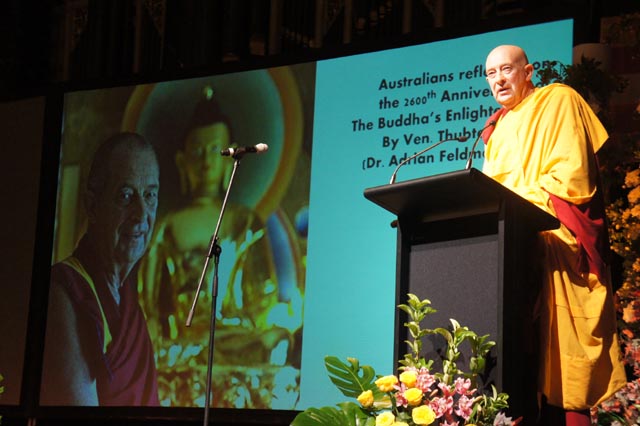
Australians reflection on the 2600th Anniversary of The Buddha’s Enlightenment
By Ven. Thubten Gyatso (Dr. Adrian Feldmann, M.D)
Sydney Tall Hall, 29th May 2011

Video link

Posted in Dhamma Talks | Tagged , | 1 Comment

Sydney lights up with the Buddha’s Enlightenment

More than 1700 devotees of Buddhism at the Sydney Townhall to mark the 2600th anniversary of the Buddha’s enlightenment, referred to as Vesak Day, on Sunday, May 29. Holding a candlelight, each participant reached out to the victims of the world’s natural disasters by dedicating the event to them.

Sydney basked in the glory of this chanting which echoed through the city and its precinct while the light from the 1700 candles illumined many hearts as well as the city. 

This international Buddhist conference called “Commemorating the 2600th Anniversary of the Buddha’s Enlightenment” was organized by the Buddhist Federation of Australia. It aimed to bring all Buddhists in Australiato recognize the Vesak as a important day for Buddhism. This success was achieved through collaboration with other government agencies, the Buddhist foundation and other associated organization, such as the United Nations, government and Buddhist temples from Cambodia, Vietnam, Laos, Tibet, Korea, Sri Lanka, Taiwan, and Thailand. The City of Sydney kindly offered the venue for the event. Councilor Robert Kok represented the council to welcome all participants.

Vesak Day has been recognized as a United Nations Day of international observance since 1999 and is celebrated by the UN and its member countries in May each year. In Australia, the Sydney Town Hall has become the venue for the event since 2007.


Director of  the UN Information Centre forAustralia,New Zealandand South Pacific,  Christopher Woodthorpe addressed the event as a representative of the UN Secretary-General Ban Ki-Moon.

Member of Parliament, Laurie Ferguson, represented Australia’s Prime Minister Julia Gillard while Councillor Irene Doutney represented Senator-elect Lee Rhiannon.

Victor Michael Dominello, NSW MP, Minister for Citizenship & Communities, represented Federal opposition leader Tony Abbott and NSW Premier Barry O’ Farrell.

Most Venerabal Phrakrupaladnayokvorawatana, President of the Buddhist Federation of Australia, which hosted the conference said the observance aimed to bring everyone’s mind to recognize the Buddha and become peaceful. This peace would then lead to kindness and generosity, two vital components to make the world a better and livable environment.

Posted in National Buddhist News | 1 Comment

Newsletter Wat Buddhavongsayaram Volume 3, Issue 3, 26 March 2011

February has been another great month for the development of the Albury Buddhist Temple  (Wat Buddhavongsayaram) including many firsts.


This month has seen the creation of t-shirts for our members to wear proudly and make the decision about what to wear to temple a lot easier. This was preceded by the very first ‘Facebook Group Vote’ to decide on the design, slogan and format of the shirts. Thanks to our member Ben for his time and effort in their creation and all those who voted for and purchased shirts. I look forward to seeing the finished product soon.

Speaking of our Facebook group, this month saw the 170th member join “Wat Buddhavongsayaram” Facebook Group and it has become an ever increasing forum, not only for the temple’s activities, events, photos and reminders but also news from the Buddhist community at large. We look forward to our Facebook community continuing to grow.

The 18th February 2011 marked a significant day on the Buddhist calendar, the celebration of Magha Puja. This is a ceremony held to commemorate an important event in the life of the Buddha that consisted of 4 amazing occurrences ; 1250 monks ordained by the Buddha attained enlightenment and assembled on the day of the full moon during an auspicious month to pay respects to the Buddha without being called together. The ceremony is a night time event by candlelight and I was privileged enough to attend the ceremony at Sydney’s Wat Dhammakaya which was quite amazing. Photos have been posted on the Facebook page for all those interested in seeing this beautiful event.

Another first came in the form of our Robe Offering ceremony which was attended by many of our wonderful temple members and lead by some very special visitors from Wat Dhammakaya in Sydney. Thank you to these generous ladies for travelling so far to participate and showing us the ritual of Robe Offerings. We appreciate their continued support and invite them to return soon.
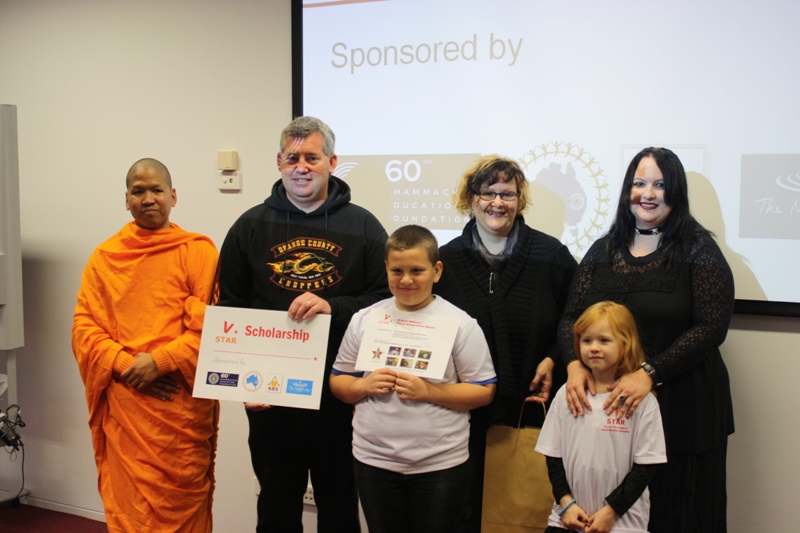
And finally our very first Buddhist Intensive Course was held at the temple. To all those that attended I hope you found the course beneficial and educational and thanks to our member Jason for providing the fabulous posters to advertise this event. If you were unable to attend the Intensive Course you are welcome to come along every Sunday to join us in our meditation and lunch offering 10.00-11.30.

Seeing you there.

Posted in Local News | 1 Comment