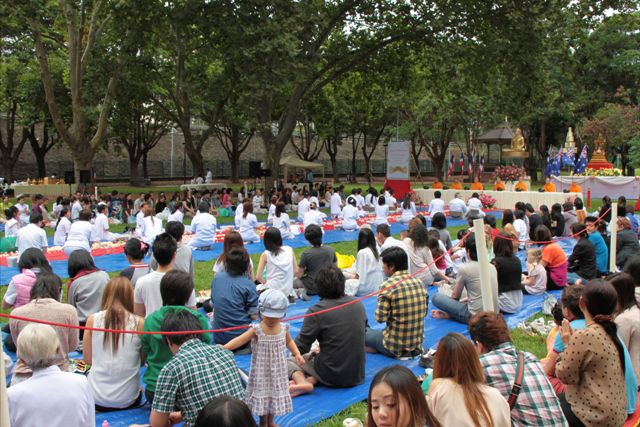
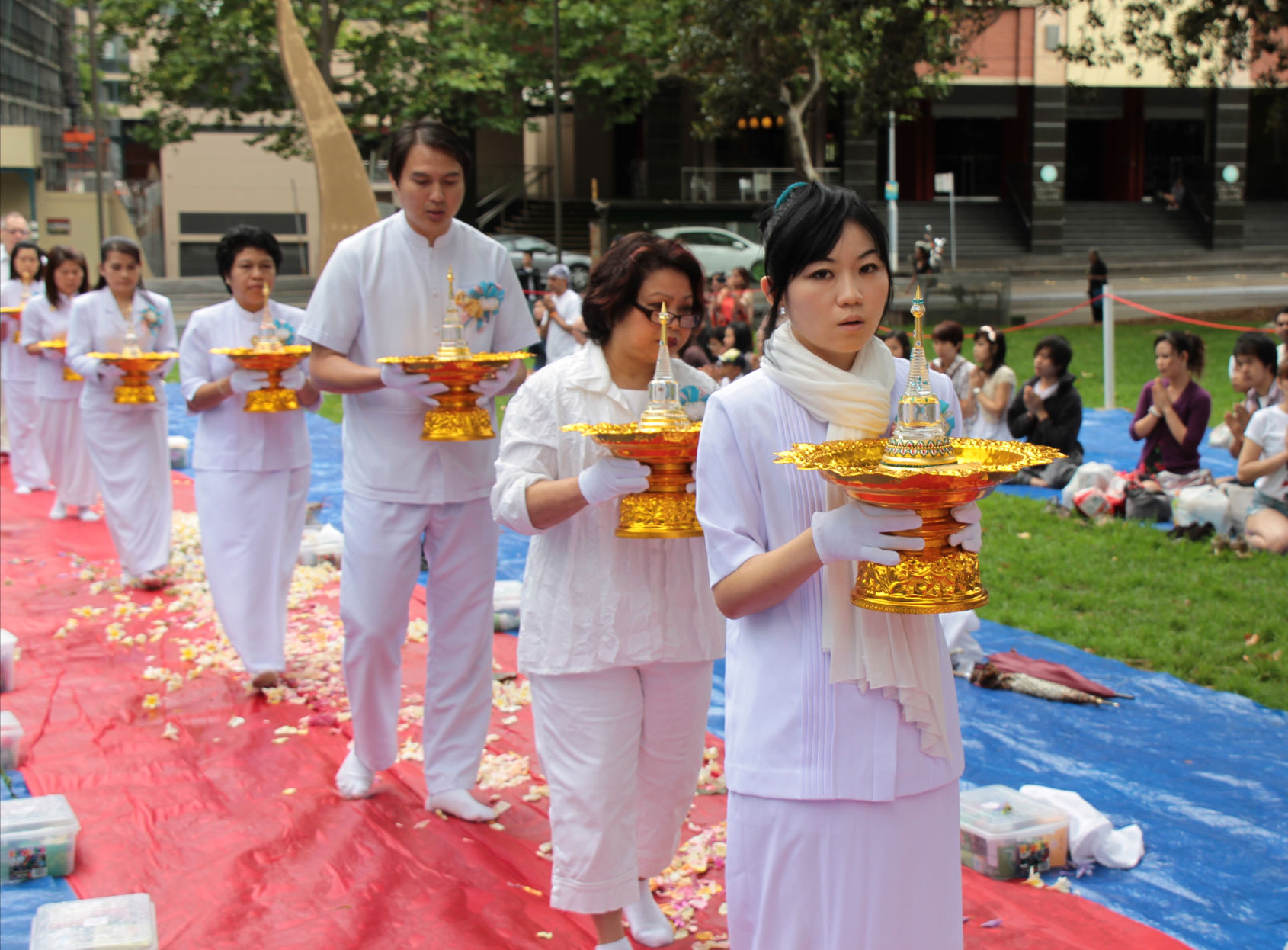
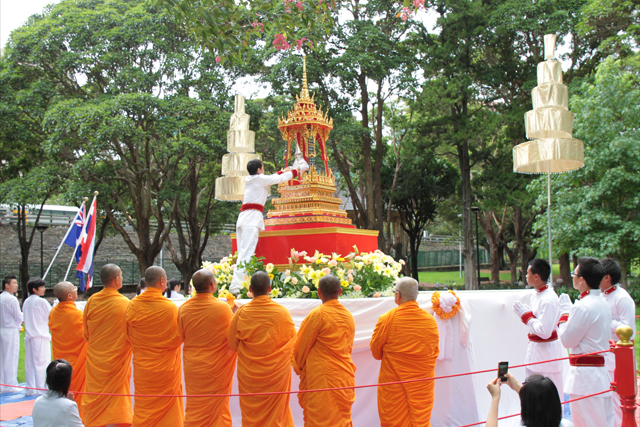
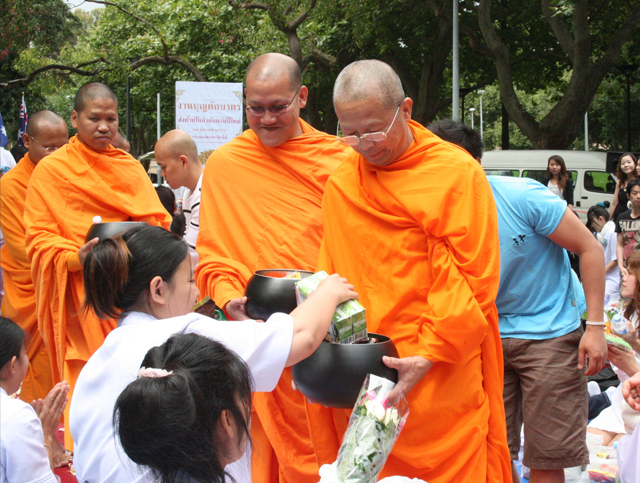
The Services at WatAlbury is running every Sunday.

This week, it seem to be a rumor around about the Buddhist temple in Albury was closed. Today, Ajahn Satit the Buddhist monk who provide Sunday services at the temple in Albury since December 2010 confirm that the Sunday Service is running as normal every Sunday.

 If you never come to experience our local Buddhist temple in South Albury, here is the program on Sunday.

Sunday Services 10.00am-11.30am

10.00 am Meditation Practice

10.30 am Dhamma Talk

11.00 am Requesting five precepts/food offering

11.30 am Having Lunch

Facilities

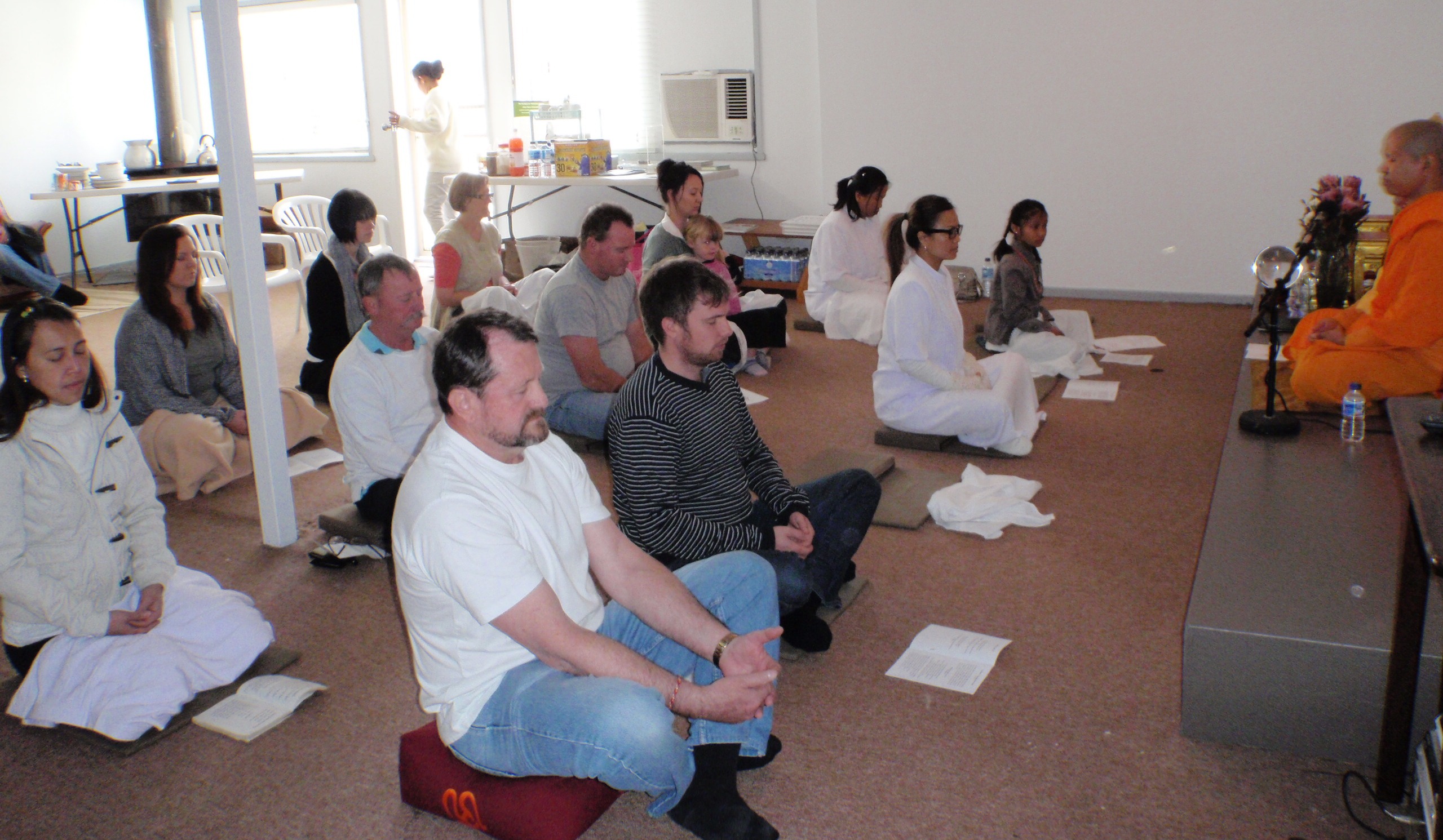
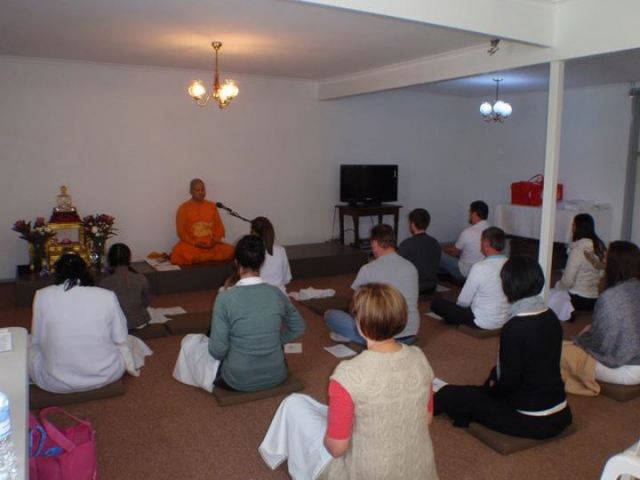
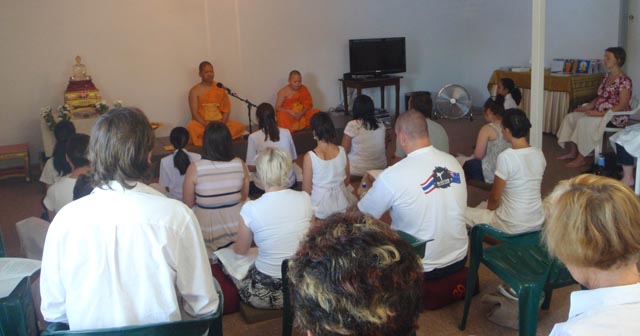
Meditation room

Meditation room

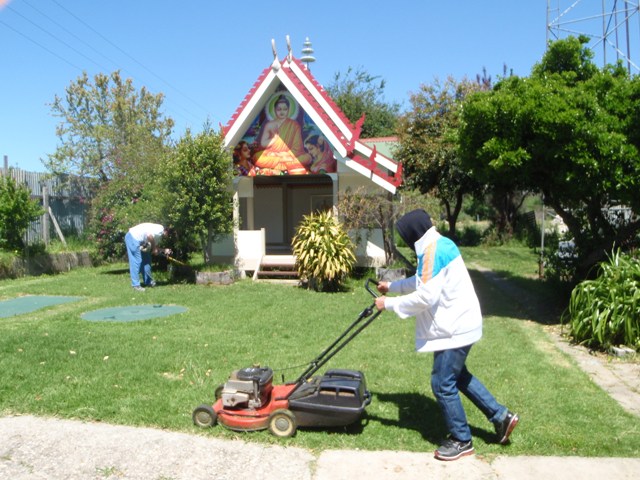
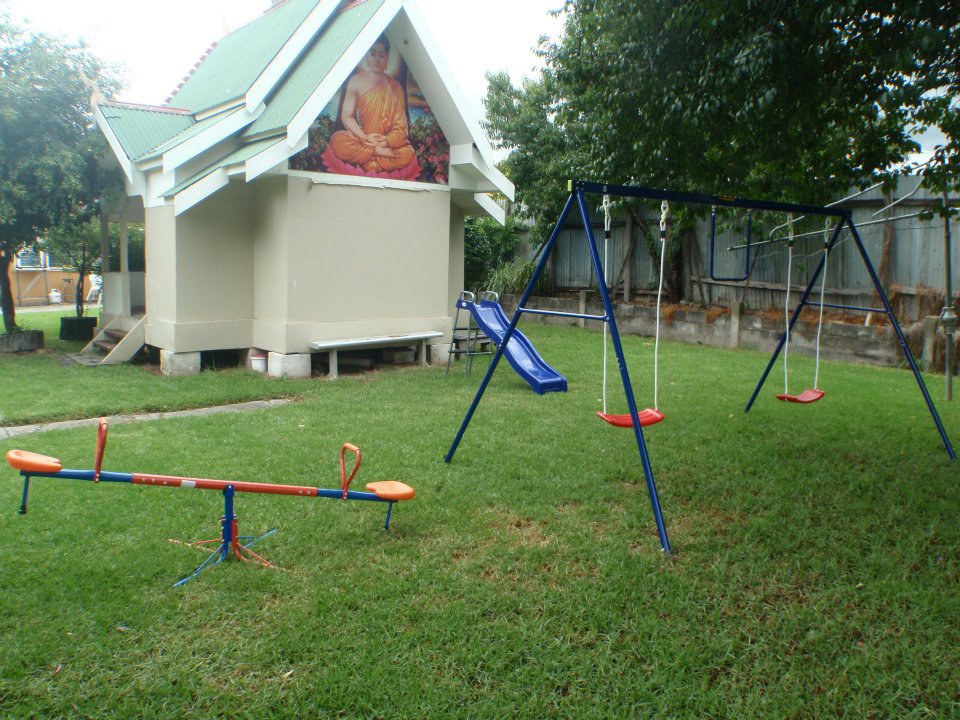
Play ground

Play ground

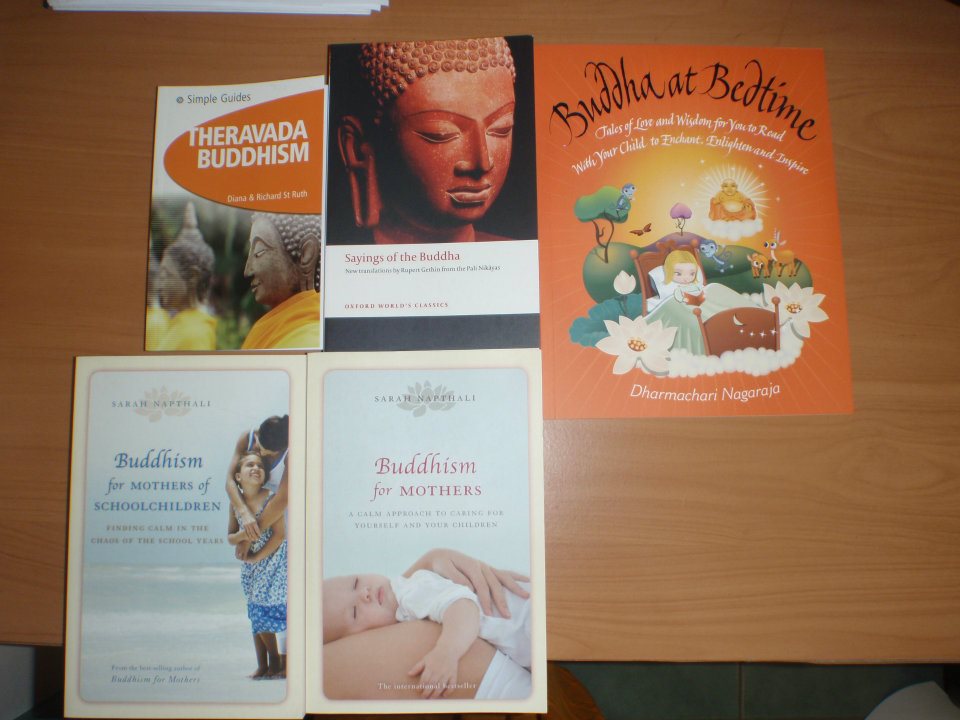
Library for Buddhist Books

Library for Buddhist Books

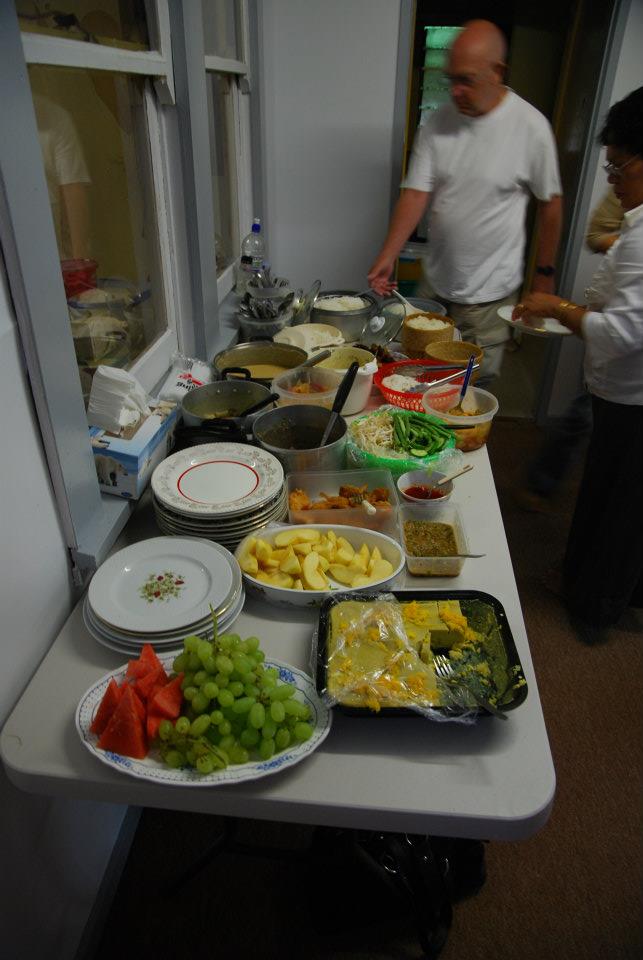
Thai buffet lunch

Thai buffet lunch

Posted in Local News | Tagged , , , , | Leave a comment

The Buddhist temple mystery

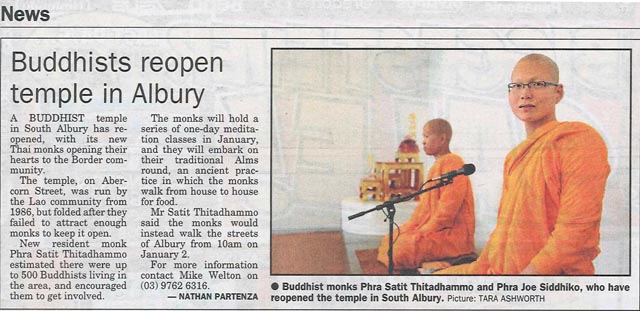
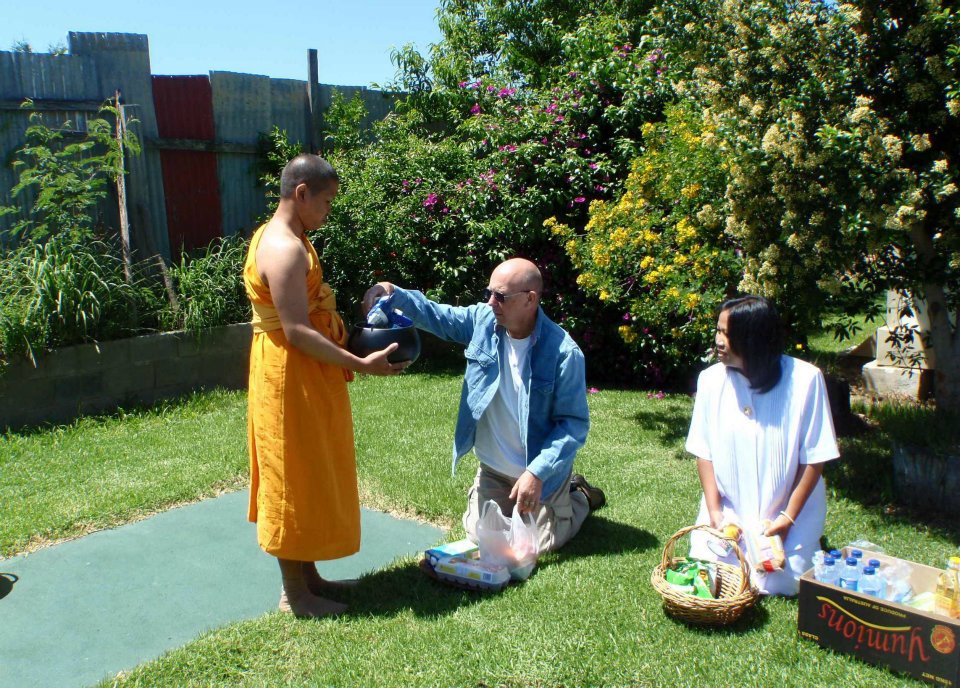
While more and more people in Albury starting to be aware of the Buddhist temple in Albury that it provides Sunday services in English which include meditation, Dhamma talks and chances to offer food to a Buddhist monk, there is this news in the local newspaper heading “Buddhist temple mystery”. What this mystery is all about? The following answers from Ajahn Satit, the Buddhist monk at the temple in South Albury would help shed some light into the situation.

Q: What this mystery is all about?

A: First of all, I like to make it clear that what is so called “the mystery” was here long before I arrived in Albury and reopened the temple in December 2010.

Q: When you said ‘reopened’ that means the temple was not operated then? Can you clarify that?

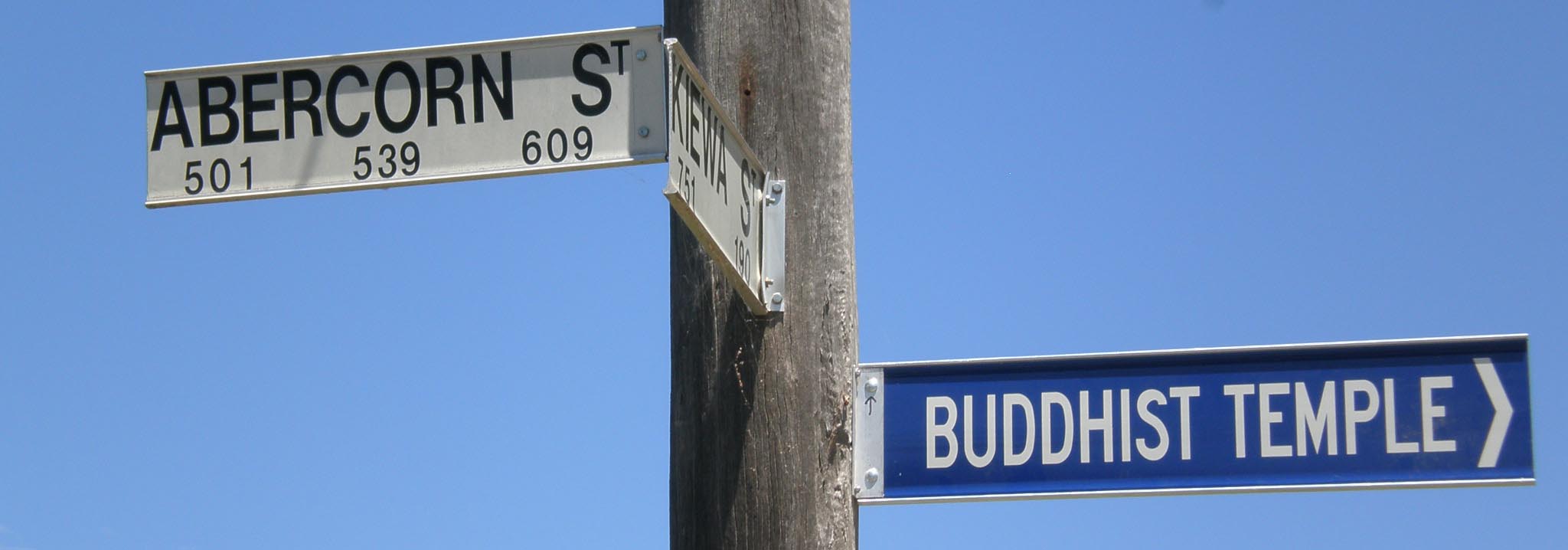
A: What I was told was that this property had been bought to be a temple in 1986 by the Lao community. (Wat Phouthavongsayaram Lao Buddhist Association Inc.), and it was used as a temple for the Lao community for numbers of year.

Q: What went wrong with the association?

A: I would not comment about that because I don’t know what was the real story, but apparently the association was deregistered by Consumer Affairs of Victoria in 2001.  So it simply made the temple property own by a deregistered association which cannot do any legal transaction.

Q: Why are you here since you know there is a problem?

A: When I was at the temple in Sydney I received a phone call from a Thai monk who was here at the time and also from the former president of that deregistered association. They were telling me about the difficult situation that they could not keep the temple running any longer due to social conflict and financial difficulty. They thought that our team could fix the problem. I did not say yes at first but our team and I came for a survey.

Q: What you find out from the survey?

A: We found that it would not be any easy task to rebuild the temple reputation as we found  very little support from the community.

Q: What did make you finally decided to come here?

A: I would say “the challenge”.  It is the word “the only one Buddhist temple in Albury and the surrounding area of 200 kilometre radius so if we don’t do anything, there would be no place where people can come to learn about Buddhism in this region.  

Q: How did you go through these difficulties?

A: We were confident with the value of Dhamma (the teaching of the Buddha), it has much more value than any precious gems in the world, because Dhamma can change people life to be better. We have Dhamma as our capital. We also provide our services in English which means we open up the temple to a broader community than what it used to be.

Q: How did you run the temple that you did not own?

A: No, we do not own the property. The ownership and legal right of the property are the matter for the legal team of the current owner to deal with and make right of the situation.

We run the temple under a new entity “Wat Buddhavongsayaram Inc.” which is registered with Fair Treading of NSW. Wat Buddhavongsayaram Inc. operates and pays for the on going expenses of the temple such as council rate, electricity, general maintenance and the repayment to the bank. Wat Buddhavongsayaram Inc does not own the property. This is one reason why we did not do a lot of development at the temple, we just use the facility to run as a Buddhist temple.


Q: Are you satisfy with the work you have done here?

A: Yes. I’m satisfy with the growing number of people who come on Sunday.

Q: What would you say about the future of the Buddhist Temple in Albury?

A: If you mean the place it is still uncertain, however we should be happy, the authority now have progress to resolve this matter. We hope the result will make everyone happy. But if you mean the Buddhist community, it will definitely grow as long as they bring Dhamma to practice.  In the worse case, if we have to leave 605 Abercorn St. we will find a new suitable place. In the mean time before the authority makes its final conclusion, we will continue to provide Sunday services every Sunday. Please come to experience our local Buddhist temple in South Albury. 

 Related news of Albury-Wodonga NewsWeekly

Albury-Wodonga NewsWeekly 2 March 2012

Albury-Wodonga NewsWeekly 16 March 2012

Related link

https://watalbury.org/2013/08/09/the-mystery-has-not-yet-come-to-the-end/

Posted in Local News | Tagged , , , , , , | 1 Comment

What the Buddha taught about wash away your sins?

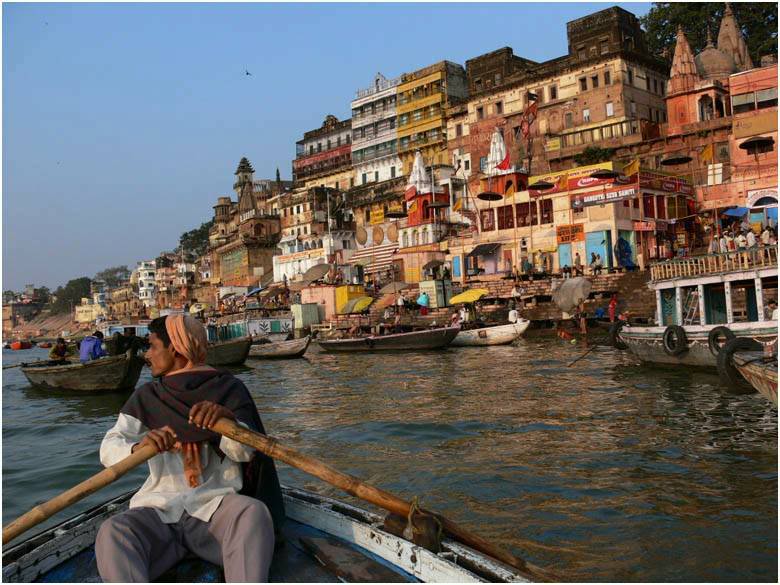
One Morning Phra Ananda, the Buddha’s attendant went for an alms round in Savatee City and saw a Brahmin named Sangarava who believed that to be pure from all sins one had to wash oneself three times a day in the ganger river i.e. morning, noon and evening. People can do away with the evening sin with morning wash, and morning sin with noon wash and the sin committed from noon to evening was washed away with evening shower in the river. It is also believed that the ganger river flowed from the heaven and by the head of the god Shiva. The water didn’t only purify sinful people but could heal disease and if they are to die they would be united with their god.

As such it was normal to see yogis and other ascetics tortured themselves with strange and different means along both ganger riverbanks according to their belief and views in order to be connected with their gods.

Some sleep on thorny beds, some cover themselves with ashes, some stood on one leg and open their mouth for a long time, some held onto a branch and let their nails grow to the point that they could pierce their palms, some worship the fire or the sun.

However there were lots of yogis who through their practices attained trances until they could see the past and the future. Some became psychic and could read people’s mind and could answer questions that people have in their mind.

Phra Ananda reported to the Lord Buddha about Sangarava Brahmin who had a routine of having a bath in the ganger river.

He said:

Exalted one Sangaravah Brahmin is now an old man, he still listens to others. Due to his old belief he therefore doesn’t know the right practice. With your limitless compassion can your lord help him?

The Lord Buddha accepted his request by remaining silent

The next morning the Lord Buddha went to see the Brahmin and asked him:

“Brahmin do you still wash yourself three times a day in the Ganger river?”

Respectfully the Brahmin replied:

“Yes, Sir I still do it”

“ What benefit do you see to have a bath only in the Ganger river but not somewhere else. Please don’t feel that I am interfering with your private life”.

The Brahmin replied with confidence:

“Phra Gotama, I have heard since I was young that theGangerRiveris sacred and can help cleansing all sins because it flowed down the head of Shiva’s head. This is a heavenly river. This is the practice that had been observed by my ancestors and I believe that it could really cleanse all sins.

The Lord talked to the Brahmin with a gentle and friendly voice. Please think that we are exchanging knowledge may I ask you is the sin in the body or mind?”

“ Of course in the mind Phra Kotama”

“when you have a shower to cleanse the body does the water get through to the mind”

“But Phra Gotama the water from theGangerRiveris not ordinary water it is sacred and it is believe that it can cleanse the sin”

“ Do you think our belief can change the truth?”

“ No Sir. Belief can not change the truth, it is as it is no matter whether we believe or not”.

So you agree that no belief can change the truth. But is it true that theGangerRivercan cleanse the sin like you believe.

Listen Brahmin,  if a man is lost in the forest and he is heading to the East because he believes it is but in reality it is West, his belief can not change the direction. It is similar to Brahmins who believed that theGangerRiveris sacred and but with their faith they can’t make the water cleanser of the sin,

Behold Brahmin, this is similar to a man with a copper pot that is filthy on the outside and inside. He is trying to clean the pot with lots of water but he only cleans on the outside. So you think that the pot is clean inside as well?.

“ It is impossible Phra Kotama, The man is wasting his energy, he could make the inside of the pot clean. It remains murky as it is.”

“ Behold Brahmin, I say that wrong actions, wrong speech and wrong thoughts caused the flaw to the mind. The mind can only be cleansed by the Dhamma It can not be cleansed with water”.

“Therefore the water from the person who has pure actions, pure speech and pure thought is sacred”

“Come Brahmin come and have a shower in our Dhamma disciplines that are profound and pure, that have the precepts as the shoreline and that are praised by pundit. All knowers loved to take a shower with it and could reach the other shore without being blemished.”

As the Lord explained, the Brahmin said joyfully: Most excellent, Lord! Most excellent! Just as one might set up what was thrown down, or were to reveal which was hidden away, or point out the right road to him who had gone astray, or might bring a lamp into the darkness so that they who have eyes could see external forms. So I, Lord, go to the Lordas refuge and to Dhamma and to the Bikkhu-sangha . Lord, may the exalted one accept me as a lay disciple gone for refuge from this day forth as long as life lasts.

Posted in Dhamma Stories | Tagged , , , , | Leave a comment

Wrong livelihood for lay followers

Right Livelihood (samma ajivo) is the fifth of the eight path factors in the Noble Eightfold Path, and belongs to the virtue division of the path.

Image

For lay people who have to do work in order to gain income for their living. They must not involve in these five businesses which are:

  • Business in weapons
  • Business in sale human being
  • Business in sale animal for being killed
  • Business in alcohol or intoxicants
  • Business in poison

These five businesses could gain income for someone to live but these businesses harmful to other lives. We should not earn our living on others suffering. When we do these businesses we do it in daily basis that mean we commit wrong doing regularly. Which this is not what our live are for. Ones should find right livelihood to accumulate more merit in daily basis.

We can choose what to make our living so the wises will avoid wrong livelihood.

Posted in Dhamma Talks | Tagged , , , , | Leave a comment

Soumana suttra (Giving vs not giving)

Once upon a time Princess Soumana with 500 princesses paid respect to the Lord Buddha and asked him the following:

Oh! My Lord if your 2 disciples who had equal faith, morality and wisdom but one was more charitable than and the other. And who upon their passing were both reborn in the heaven world. Apart from being celestial beings would they be different.

The Lord said:

Listen Soumana both of them would have extraordinary difference in celestial life span, complexion, happiness, status and sovereign power. The non- charitable one is likely to be not as privileged as the charitable one.

My Lord once being reborn as human beings would they be amazingly different?

The Lord said:

As human beings both of them would have  astonishingly difference in life span, complexion, happiness, status and sovereign power. the non giver would not be as advantaged as the giver.

Oh! My Lord when ordained as monks would they be unusually different.

Listen Soumana

Both of them would deserve differences in 5 aspects:

When the giver asks for robes he would receive lots of them and when he doesn’t ask for anything he still receives little.  But the non giver wouldn’t get such treatment.

Similarly with alms. This applies to accommodation, requisites and medicine.

When living with other monks, the giver would be pleasantly treated most of the time. He would be addressed pleasingly most of the time and well thought of most of the time.

The giver would receive mostthings that are satisfying

As a monk the giver would be treated with priviledge in the 5 above mentioned circumstances.

My Lord when attaining Arahatship would they be different?

Listen Soumana

I don’t see any difference in their attainment.

My Lord this is wonderful. This means that we ought to give or make merit because merit would support beings whether they are celestials, humans or even monks.

That’s the way Soumana we ought to be charitable, make merit because it brings support to celestials, humans and even monks.

After saying this proverb, the Lord  added the following:

The flawless moon would be brighter than any stars in this world. Similarly a person who is endowed with morality and faith would have a more flourishing life through generosity than the stingy one. Likewise a Buddha’s disciple who is a sage and who has a vision would be more priviledged than the stingy one in regards to the 5 circumstances i.e. life span, complexion, happiness, status and material comfort and he would enjoy himself in the heaven after his passing.

Book no.22 of the Tripitaka


Posted in Dhamma Stories | Tagged , , | 1 Comment

The fruit of rejoicing in others’ merit

Making merit by offering to the Sangha will gain countless fruit to the giver like the farmer who plants the crops in a rich soil. Those who wish for heavenly existence and nirvana should choose their merit field wisely. The crop is your faith, planting is offering, the merit field is the Sangha and the yield at harvest time is the merit. If the field is the rich one the result will be tremendous.  Merit will be the link for wealth that will be with us every life.

The tripitaka describes that:

“There are these four pairs of eight people of whom the wise men have praised that are the people deserving of offering. They are the Sangha who are disciples of the Lord Buddha. They bring the light into people’s lives by teaching Dhamma. The merit gained from the offering to these people is countless like the vast quantity of water in the ocean.”

Besides making the offering by ourselves, rejoicing in others’ merit making will amazingly give you merit as well. This merit called ‘Pattanumodhamai’. It is a special merit that is overlooked by some. The Lord Buddha said that rejoicing in others’ merit is the merit gaining itself as it is one of the Ten Merit Making Actions which we should see the importance of it. We should rejoice in the merit of others and if it is joyfully and faithfully done it will gain us an unexpected celestial wealth as it happened in the following story.

In the Buddha’s time, Mrs. Visakha, the great supporter to the Lord Buddha and his disciples, has organised and paid for the building of a great hall to be the residence of the Lord Buddha and other Sanghas. The building has 1000 rooms, 500 rooms on each floor. It is so grand that it could be the heavenly abode. The construction was under the supervision of Phra Maha Mokalana, one of the Buddha’s great disciples.

It took 9 months for the construction to finish. At the celebration of this great hall, Mrs. Visakha took 500 friends in for a grand tour of the building. She overjoyed in this offering and said to all her friends that she shared this merit with them and may they rejoice in this merit with her. All her friends rejoiced in the merit and said ‘Sadhu Sadhu, it is very well offered’.

Of all the 500 friends, there is one lady that gave her special rejoicing of the merit. She felt very faithful in the merit as if she had done the merit herself. After she passed away, she was reborn in Tevatimsa (the second level of heaven) in a grand celestial abode.

One day Phra Anurudha was travelling into that realm and saw this friend of Mrs. Visakha. He recognised her and asked her “you have good complexion and glow like the morning star, you have very pleasant voice and beautiful body scent, when you move your hair decorations move with you and make very charming noise. Dear Angle, what merit that you make, gives you this fruitful result.”

The Angle said

“Dear Most Venerable, my friend Mrs. Visakha of Savattee has built a great hall for the Sangha. I witness the offering and rejoicing in that merit faithfully and joyfully and it results in this grand celestial abode complete with roomy residence beautifully decorated beyond the imagination. It fills with joyful music and singing by celestial being. It also includes with golden sand ponds full of fish and different kinds of lotus that give pretty scent carried through by the breeze. The orchard has all kinds of fruit that magically exist. This is the result of rejoicing in my friend’s merit only.”

Phra Anurudha thought that only rejoicing in the merit gave the friend this great result, what about Mrs. Visakha who made that merit herself, what will be the result for her merit. He asked the Angle. She said that Mrs. Visakha was reborn in the fifth level of heaven as she had accumulated a lot more merit in her life time.

The Angle also asked Phra Anurudha to encourage people to make offering to the Sangha deserving of offering and faithfully listen to the Dhamma. It is not easy to be reborn in human form. As long as we are still travelling in the cycle of existence, getting rid of stinginess and other unwholesomeness is part of the key to heaven.

As you can see, rejoicing in others’ merit, results in an unexpected fruitful merit. If you joyfully and faithfully say ‘ Rejoice in your merit’ to others’ merit performing like the Angle in the above story, the fruitful result will happen to you at least 50 percents. Always have good thought towards others and instantly rejoice in the merit if and when you see someone making some merit.

Best of all, do the merit yourself and let others’ rejoice in your merit in stead, be the role model to others and be the refuge to all beings.

Posted in Dhamma Talks | Tagged , , , , , , | Leave a comment

The six roads to ruin(Abai ya mook)

Abai ya mook (bad drive) means the entrance to destruction.

All of us like to be successful in life but with lack of right understanding or lack of discipline some may walk their life in the wrong ways. The Dhamma can be translated as “natural law”. It applies to all being regardless of nationality, religious, gender or age. The Lord Buddha only discovered (not invented) the Dhamma. The Buddha mention six roads to ruin (bad drive) which we must avoid as follow:

There are at least 6 kinds of bad drives.

1) Drinking alcohol.

2) Going out at night.

3) Entertaining.

4) Gambling.

5) Associate with bad people.

6) Too lazy to work.

These bad drives will ruin the conscious state of mind, resulting in falling into bad habits, often doing wrong things shamelessly and not afraid of kamma.

What are the negative effects from bad drives?

1) There are 6 negative effects that drugs and alcohol will cause:

1.1 Waste of money which is obvious

1.2 Fighting due to clouded mind and wrong judgments.

1.3 Illnesses.

1.4 Loss of good reputation of oneself and the family from bad behaviours and conducts due to loss of conscious mind.

1.5 Loss of self-control which will lead to shamelessly perform bad things such as sexual misconduct or lying.

1.6 Loss of intelligence because it will ruin the nervous system and brain cells.

Going out at night

2) There are 6 negative effects from going out at night:

2.1 Not taking good care of yourself.

2.2 Not worrying about others in the family.

2.3 Not taking good care of your assets and the reputation of your family.

2.4 Others are apprehensive of you.

2.5 Will always be reproached by others.

2.6 Continuously cause problems.

3) There are 6 negative effects from continuous entertaining:

3.1  Not being interested in earning a living.

3.2  Wasting money unnecessarily.

3.3  Wasting time watching the entertainment.

3.4  Being irresponsible at work.

3.5  May lead to perform sexual misconduct.

3.6  Constantly living in a dream world.

4) There are 6 bad results from gambling:

4.1 The winner gains vanity while the loser loss his/her faith

4.2 The loser will try to recover the lost and may result in losing more money.)

4.3 The loser wastes a lot of money unnecessarily.

4.4 You are not trustworthy.

4.5 Friends always look down on you.

4.6 No good people will want to marry you.

There is an old say that,

to have the house on fire 10 times is not as bad as one loss in gambling as the fire only destroys the house but the land is still there. With gambling, you stand to lose everything, your money, the house, the land, your friends, your jobs and even the family. It may send you to bankruptcy. No one would want to be associated with you as in people’s eyes, the gambler is one of a thief, con-artist and swindler who will rob you in any way he/she can.

5) There are 6 negative effects from associating with bad people:

5.1 Leading you to gambling.

5.2 Leading you to sexual misconduct.

5.3 Leading you to be an alcoholic.

5.4 Leading you to be a bad example to others.

5.5 Leading you to cheating.

5.6 Leading you to be a gangster.

Gambling.

Associating with bad people can lead you to be involved with all bad drives. It is important to sort out the kind of people you associate with. It should be the most concern of parents with young children to consider and teach their children to stay away from friends that lead them to all kinds of misbehave. Make them understand the consequences of involving in wrong doing, intentionally or not, with the group of bad friends. Point out to them the cases that we see and hear so often about innocent children who have problem with the law because they mix with the wrong group of friends.

6) There are 6 negative effects from being lazy toward working. There are two types of people in this case. One is that they are born lazy and the other develops the habit from the bad example of people they associate with. Their excuses of not working would be:

6.1 It is too cold to work.

6.2 It is too hot to work.

6.3 It is too late to work.

6.4 It is too early to work.

6.5 It is too dark to work.

6.6 They are too thirsty or too hungry to work.

People who always ask to push the day back to start work tomorrow; they will always be lazy and never want to work. When they don’t work, they won’t have money.

These bad drives are the road to ruins. People who take the journey on this road will find themselves in all kinds of trouble, being deep in debts, being on the wrong side of the law, having physically or mentally ill health or even being suicidal. People who managed to take themselves from this road would say the same thing that if they could turn back the time, they would not even consider taking the journey on this road at all.

Posted in Dhamma Stories | Tagged , , , , , | Leave a comment

A New Way to Celebrate New Year in Sydney

New Year is the time to celebrate, the time to reflect the year passed and the time to make resolutions for the year ahead.

People celebrate their New Year in many different ways. For Buddhists in Sydney, they chose to make merit and do good deeds to start their new year.

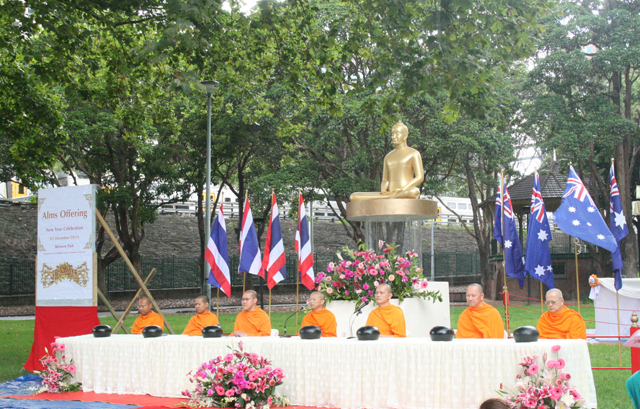
Hundreds of Buddhist gathered at Belmore Park, next to the heart of Sydney CBD – Central station, to join in alms offering to Buddhist monks in the morning of the New Year eve. This ceremony is a regular activity for the occasion but this year is very special as the Buddha’s relic is present.

Buddhists respect and worship relics of the Buddha as the Buddha himself therefore to have the Buddha’s relics at the centre of the ceremony is like inviting the Buddha to lead the Sangha Dhana (alms offering to the Buddhist monks) ceremony of which all Buddhists believe is the highest merit of any individual offering.

The ceremony started with the procession of Sanghas and lay people bringing in the Buddha’s relics and relics of his great disciples into the ground. The procession led by Dhamma’s flags followed by the Sangha congregation led by Most Ven. Sudhammo (Phra Kru Palad Nayok Worawat) carried the Buddha’s relics received from Sri Lanka and then the congregation of lay people carried other Buddha’s relics and the relics of his disciples. The Buddha’s relic was placed in the organised respectable place at the ground. The Sangha then gave blessing and started the alms round.

After the ceremony, people took this rare opportunity to pay homage to the Buddha’s relics which stayed at the ground for the rest of the day. The traditional way to pay homage to the relics is to walk clockwise 3 times around the relics each time represents the respect to the Buddha, the Dhamma and the Sangha respectively.

Everyone was pleased and joyful in the merit making on the day. It is a good start for the new year. They certainly make all the wishes and resolutions for the year ahead.

Posted in National Buddhist News | Tagged , , , , , , , , , , , , | 1 Comment

The Buddhs’s Relics Exhibition Opening Ceremony, Sydney CBD


Buddhist monks and laypeople in Sydney are very pleased to receive a large rare collection of the Buddha’s relics and the relics of his disciples from a collector in Queensland. The collection is on loan for an exhibition in Sydneyduring 24th December 2011 to 1st January 2012. 

In the morning of Saturday 24th December, many invited guests arrived at the office of the Buddhist Federation of Australia and 60th Dhammachai Education Foundation which is now turned to be the exhibition room.

The opening ceremony begins with meditation to purify their mind to receive the relics. After meditation, a procession was formed led by Most Ven. Sudhammo (Phra Kru Palad Nayok Worawat) carried the Buddha’s relic received from Sri Lanka to be the first relic to put on display followed by thirteen laypeople, each carried a relic to be displayed in the exhibition. This is to formally mark the opening of the exhibition.

The exhibition was open to the public around 1.00 pm that day and will open every day from 10.00am-6.00pm until 1st Jan 2012.

Related links

Facebook page

Official page

Other news page

Posted in National Buddhist News | Tagged , , , , , | 1 Comment

Reckless one is similar to a dead person.

One morning when the Lord Buddha went for an alms round he saw a merchant setting up his shop to run a business for the three seasons i.e. for summer, winter and autumn. Knowing his future, the Buddha smiled, that caused Phra Ananda to ask the Lord as to what he had seen.

The Lord Buddha said that this merchant didn’t know that something tragic would happen to him.  That he only had 7 days to live. He was still busy with his business. Hearing that Phra Ananda took pity of the merchant and asked the Buddh’s permission to let the merchant know about his fate.

The merchant got terribly frightened and sad. He thought to himself that he didn’t have any refuge and now death is getting closer. He then invited the Lord Buddha and the sangha of bikkhus to have meal at his place for 7 days. The Lord felt compassionate towards him and accepted to be his field of merit on the 7th day.

The Lord expounded that:

“normally pundit should not be reckless, should not think death will not come and keep oneself busy working through the three seasons. Reckless one is similar to a dead person.”

After the Lord finished his sermon the merchant had become a stream winner, Phra Sodapana, who will definitely go to Nirvana, lead a precious and safe life in the cycle of existence. The merchant finally died after 7 days.

Trnslated by Chan

Posted in Dhamma Stories | Tagged , , , , , , | Leave a comment