The new exercise

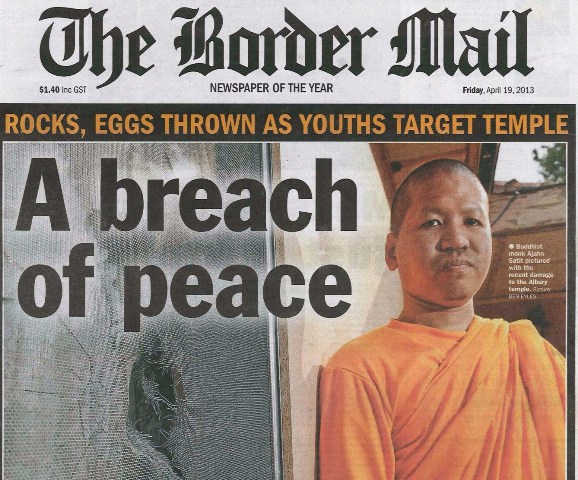
Youths Target Temple

Once again the Buddhist temple in Albury has reacted to the recent incident of vandalism, in the way that complies with the principle of one of the world most peaceful religions.

Last year, when the temple was twice broken into and most of the equipments used for Sunday service together with garden tools were stolen; the monk analysed that the thieves were driven by greed. His solution to stop the thieves to come back was to donate any valuable things that remain in the temple to the local charities. He then could keep the temple a peaceful place again.

second_attack

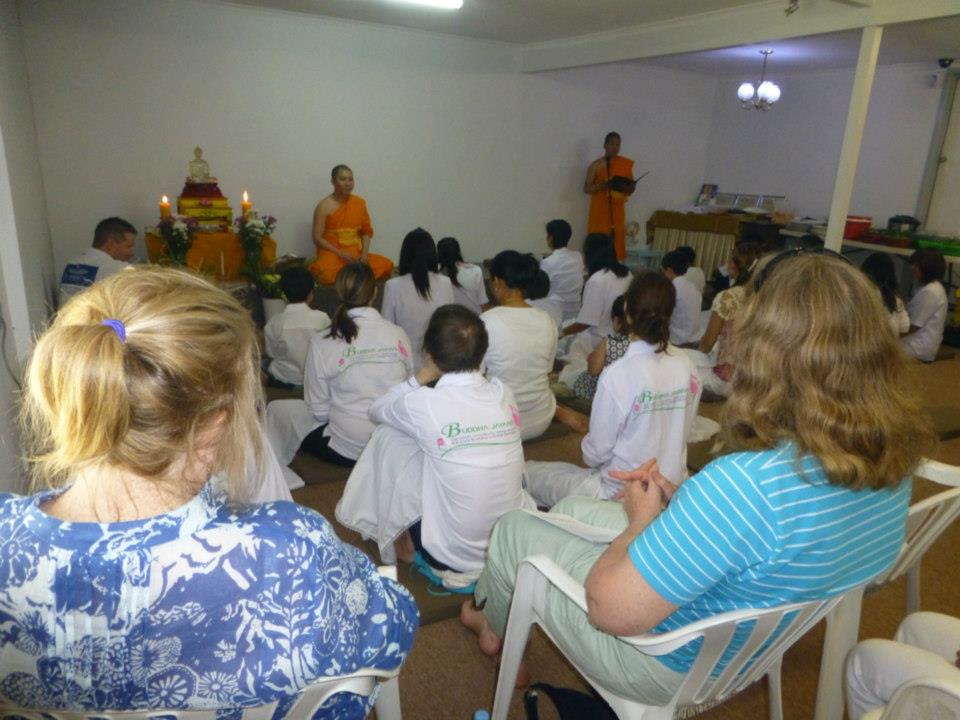
As for the recent incidents of vandalism which happened repeatedly, five times in three weeks; the monk chose a non-aggressive approach, not even a word was said, to the vandals. The second incident was found on Sunday 7th April 2013 morning when Ajahn Satit has just arrived from Sydney for Sunday service. He found windows were broken by number of rocks thrown in, which were evidenced on the ground. He left the problem aside and carried on the Sunday service as usual. At the Dhamma talk he said to the audience that the attack was an exercise of tolerance for all. Whoever conducts bad deeds will receive the consequence themselves.

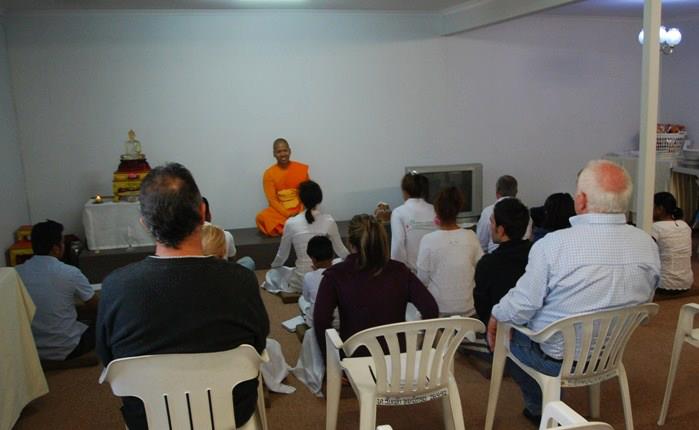
Dhamma Talk WatAlbury

The vandals were continuing their action; they may feel proud of their evil achievement when they should really be ashamed of their doing – what they did was vandalising the residence of a harmless man.

Ajahn Satit changed the crisis, the result of the incident that day, to be an opportunity for those who attended the temple on the day, to gain extra merit in helping to fix the windows, putting away the broken glass and so on.

The media have been very helpful in bringing this evil act to the public knowledge and may even help bring this vandalism to an end. With the coverage in the Border Mail and both local TV channels (Win TV and Prime TV), people around town have been talking about the incidents. Many come to visit the temple, some sent words of care and comfort on the temple facebook page, some come to make donation. It seems that everyone in town now knows the monk who lives at South Albury temple and they care for his welfare.

Ajahn Satit and members of Wat Albury are very grateful to all the kind gestures shown by the community towards the temple, they are very much appreciated. Also a special thank and appreciation to Innovative Security Group Australia Pty Ltd, Michel McLeish CEO and the team who offer to help patrolling the street at the time it is most needed.

Related links

http://au.prime7.yahoo.com/v1/news/a/-/local/16792963/buddhist-monk-rocked-by-attacks-video/

http://au.prime7.yahoo.com/v1/news/a/-/local/16808285/monks-attacker-caught-on-film-video/

http://www.bordermail.com.au/story/1442887/buddhist-egging-attacks-peace/?cs=11

Posted in Local News | Tagged , , , | Leave a comment

The Right Place to Live

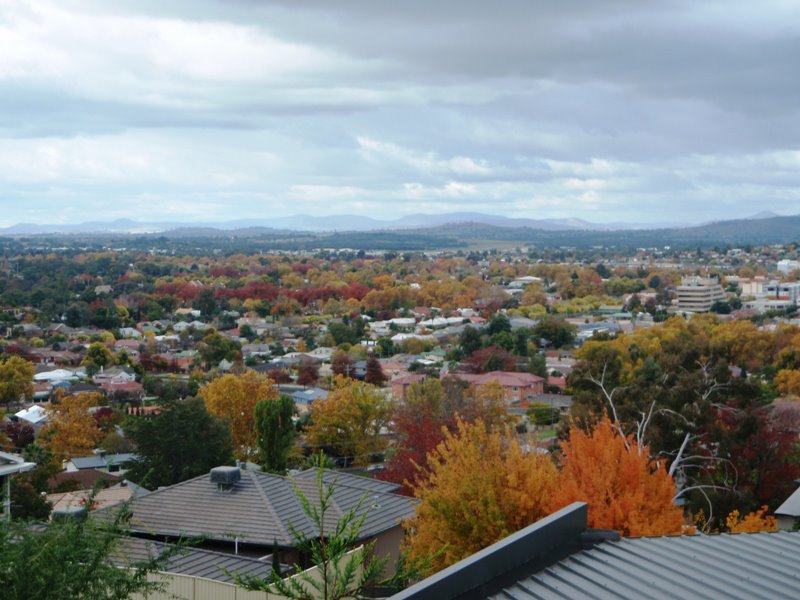
Envocities campaign is set up to encourage people to live, work and invest in regional NSW. The campaign promotes lower cost of living, strong career, business opportunities and lifestyle. Albury has been selected as one of the city in this campaign.

Furthermore, Suncorp Bank have compiled data from variety of government resources, including the 2011 National Census, crime statistics and the Public Health Information Development Unit, to compare different cities in Australia in 10 key criteria which include access to schools, health, childcare, income and housing. This results in a list of 30 most populous cities in Australia. It is interesting that regional cities have a better balance of job opportunities, income, school sizes and lower crime rates. Victoria and New South Wales’ top entry, forth on the overall list, is the twin-cities of Albury-Wodonga which has a good result in housing affordability, health and a sense of community.

An additional feature for Albury is a Buddhist temple which could perhaps be a decision making point for Buddhists or those interested in Buddhism, to move to Albury.

colur_albury

Mangala Sutta, the 38 blessings of life according to the Buddhist tradition, states in item number 4, “Patirūpa desa vāso ca / reside in a suitable locality”. It is clearly shown that the Buddha emphasises the effect of locality to the happiness in life. What is the Buddhist view of suitable locality? It includes all things necessary for comfortable living, good weather, good source of food, good people and the most importance of all is the accessibility to Dhamma and the practicing of Dhamma.

Dhamma means the teaching of the Buddha who discovered and gave these Dhamma to the world more than 2500 years ago. It has been perpetuated by Buddhist monks who memorise, practise and disseminate these Dhamma.

Temple is where monks reside to practice themselves with the community of monks. Senior monks train the new and/or junior monks. Temple is usually located in the proximity of a village or town as monks need support from the lay community.

Buddhist monks renounce their laity life as is harder to be able to always do good deeds and be free from all evil. Buddhist monks vow to follow foot step of the Buddha, on the ‘middle path’, practicing Dhamma to pursue perfection. They can be a good living example for lay people of how beneficial practicing Dhamma can be in everyday life. People can read the Dhamma in Tipitaka many times over but it will not come to effect in their personal development if it has not been practised. Buddhist monks can guide lay people in this process.

Practice at Albury Buddhist Temple

Buddhist believes in the law of Kamma (law of the nature) every action has its own consequence. What we receive at the present is the result from our action in the past. If we want to have a happy future life we need to make the right cause, the Buddhist calls it ‘merit’ (Sanskrit puya, Pāli puñña), or positive energy. The quantity and quality of merit come from our actions varied by many factors. One of the factors is the purity of the receivers. As Buddhist monks are on their path of purification to reach their ultimate goal, Nirvana, they are the fertile field of merit that will yield the highest fruits for the givers. It is like the farmer put fertilizer in the field that has no weed, the plants will get the full benefit of the fertilizer, quantity wise, they will grow quicker and better and they will yield good quality harvest for the farmer. On the other hand, if the field is full of weed, the plants can only take in part of the fertilizer. With less quantity of fertilizer intake, the quality and the yield of the harvest will not be as good.

giver

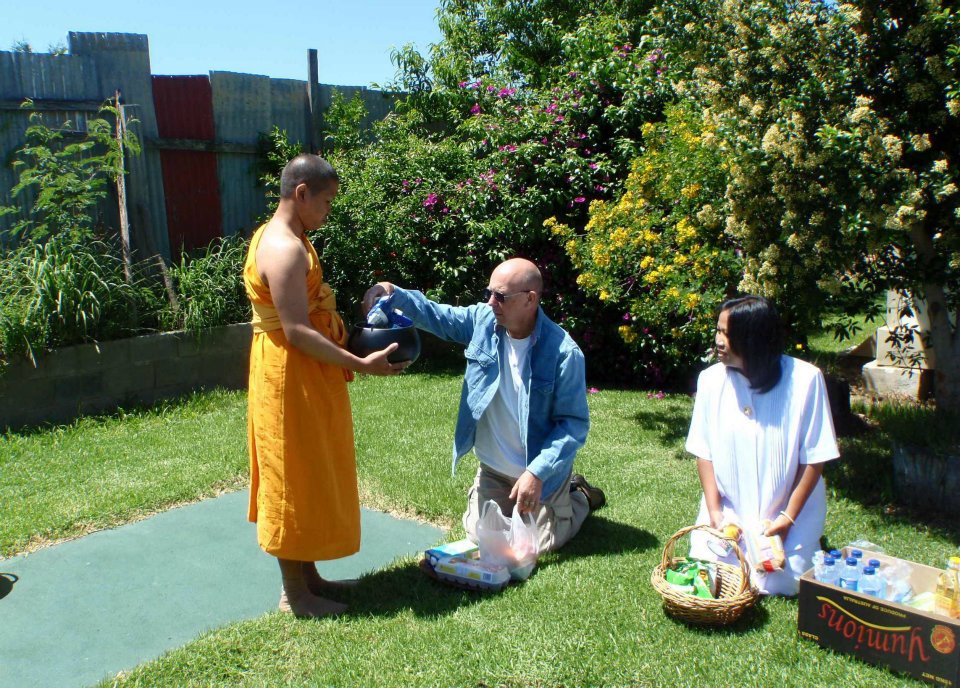
Lay people have to work to earn their living, the opportunity to pursue perfection will be less, but they can accumulate the merit by giving support (Dana), to the Sangha (monks), the fertile field of merit. Dana is one of the ten based meritorious actions (Dasa Punna Kiriyavatthu) which include:

i) Dana: giving charity or generosity

ii) Sila: morality i.e. observing 5 precepts, 8 or 10 precepts, etc.

iii) Bhavana: meditation to arise the skilful states of the mind conducive to liberation

iv) Apacayana: reverence to the Triple Gem, one’s parents, teachers, elders and so on

v) Veyyavacca: service to Triple Gem, one’s parents, teachers, elders and so on

vi) Pattidana: sharing of merits

vii) Pattanumodana: rejoicing in others’ merits

viii) Dhamma-savana: listening to the Dhamma

ix) Dhamma-desana: teaching the Dhamma

x) Ditthijukamma: straightening out one’s view

The temple would be the perfect place to conduct any or all of these activities.

P1000953

We could see the practice of Buddhism as self-improvement but it does not mean we have to do it alone. Theravada Buddhism focuses on the middle path known as noble eightfold path. Interestingly, the Buddha guided the prerequisites to the noble eightfold path from two factors, internal and external ones. Internal factor called yonisomanisikara or systematic attention and external factor called kalyanamittata or good friends.

This evidenced in the Buddha words:

Just as, monks, the dawn is the forerunner, the harbinger, of the arising of the sun, so friendship with good people is the forerunner, the harbinger, of the arising of the Ariyan eightfold way. (S.V.28, 30)

Just as, monks, the dawn is the forerunner, the harbinger, of the arising of the sun, so systematic attention is the forerunner, the harbinger, of the arising of the Ariyan eightfold way. (S.V.29, 31)

The external factor, good friends is an important factor and there are many of them at the temple.  They all come to practice themselves on the right path (guided by the teaching of the Buddha). Everyone can be good friend to each other especially, the teaching monks who are further ahead on the path. With their kindness and experience, they will do their best to assist us to walk on the right path.

Wat Albury, had been offered as the place of practice to the border community since the end of 2010. It has been a happy place of practice for many who keep coming back and some of them are there every Sunday to assist the monks and be good friends to new comers. Wat Albury has maintained a good balance of Buddhist tradition to accommodate both Eastern and Western audiences.

The temple community continue its commitment to add to the future to Albury-Wodonga, a happy place to live as everything compounded in the place, complies with the factors of being a ‘suitable locality in the Buddhist view’.

You may also interested in reading

What experiences at Wat Buddhavongsayaram, Albury are like?

Good friends (Kalayanamitra), Why it is so significant to the path?

2nd Anniversary of Wat Albury

Why our youth do not join the temple?

Posted in Dhamma Talks | Tagged , , , , , | 4 Comments

The Reflection of the 2nd Anniversary Celebration

Having attended services at Wat Albury since February this year, I was excited to be able to join in the 2nd year anniversary celebrations on Sunday November 25. I arrived shortly before the proceedings began and was amazed at the amount of people who were already there to join the festivities.

I went through to the kitchen with my food contribution and was met with a flurry of activity. There is always amazing food offered at the temple for us to share lunch together, but it was already obvious that today’s food would be something special. Our regular ‘chefs’ had tripled in numbers with friends from temples in Melbourne and Sydney all offering their services.


Everywhere I walked, I was met with friendly smiles and greetings.
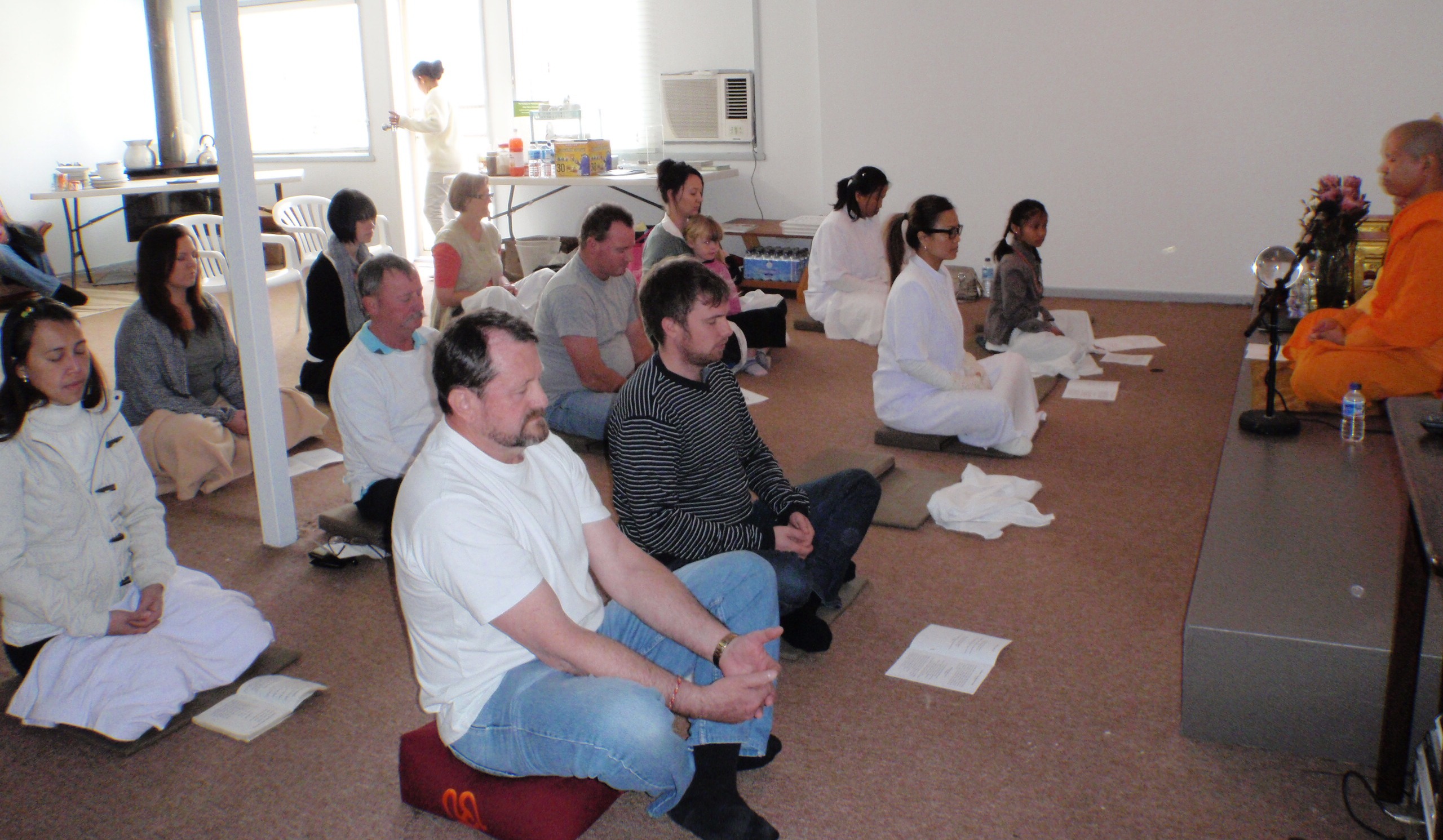
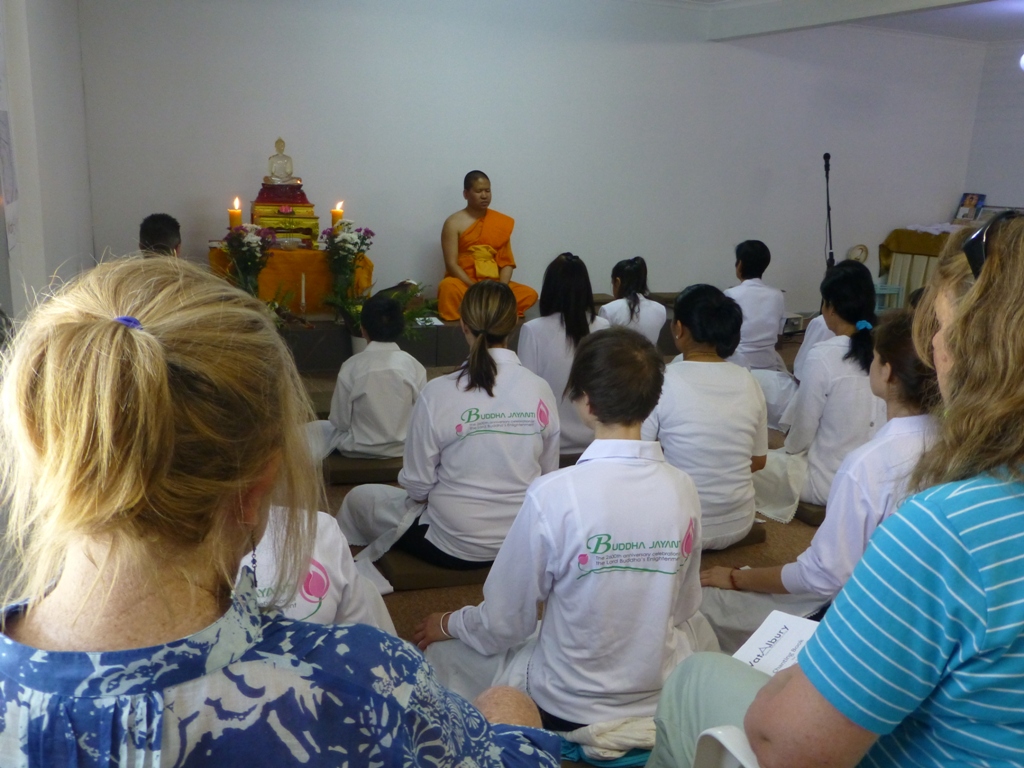
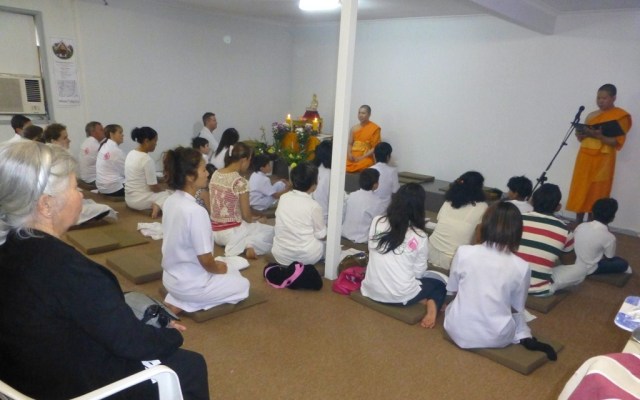
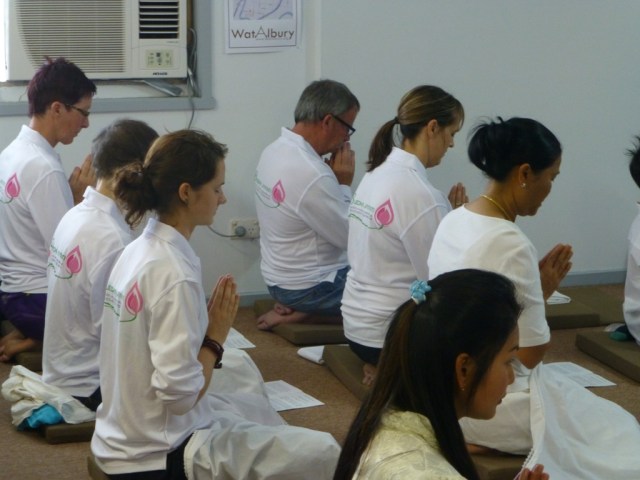
As we all took our places on the floor and in chairs, ready to begin, we made room for the large crowd that had come to join in the celebrations. As always, we started with meditation. The crowded room fell silent as we took the time to focus on our minds and relax.

After mediation and our weekly Dhamma talk, Ajahn Satit gave a formal speech to commemorate the day. He spoke of the beginning of the temple, two years ago, when only three or four people would attend the services. Even when I looked back to February, there were times that there were only five to ten people. Now it is full most weeks due to Ajahn Satit’s commitment to building such a welcoming place. As he said in his speech, “We do not ask why people don’t come to the temple. We only look at making temple a good place for people to come. We have to develop good place, good food, good friends and good dhamma.”

As he spoke about the past 2 years, I also reminisced about my time at the temple. I remembered when thieves took lawn mowers and other equipment earlier in the year. When Ajahn told us at the Sunday service after the second theft that the temple was going to donate all other items of value to charity to demonstrate our tolerance and kindness, I remember how proud I was that I was now part of this generous community.
I also thought back to other happy times – meditation, dhamma talks, the hilarious ‘pig attack’ and above all, meeting some wonderful people.


Ajahn presented some certificates to those who had been there from the beginning to help to promote the temple in the community. He then presented the children with gifts which brought much delight to all of us.


Lunch was like a huge indoor picnic – people on chairs or cross-legged on the floor, live music and delicious food. We had a great time meeting new friends – from Melbourne and Sydney and others from the local area that had been there in the early days.

Visitors from Melbourne

It was an excellent day and I look forward to being a part of many more future anniversary celebrations in the future.
I would like to congratulate Ajahn Satit on his commitment in travelling to Albury each week and working so hard to give our community a place to come together and learn from him and each other. Each week he provides us with his knowledge and inspiration to be better people.

Thank you.

From a member

Photo links

http://sdrv.ms/RcmRqL ; http://sdrv.ms/10FwjV6 ; http://sdrv.ms/TdnRWX; http://sdrv.ms/Te5vFl

Posted in Local News | Tagged , , | Leave a comment

2nd Anniversary of Wat Albury

Despite the pending decision from the authority re the legal status of the place, Ajahn Satit and members of the temple announced the celebrate the 2nd Anniversary of the reopening of Wat Buddhvongsayaram, known to many as Wat Albury or Albury Buddhist Temple.

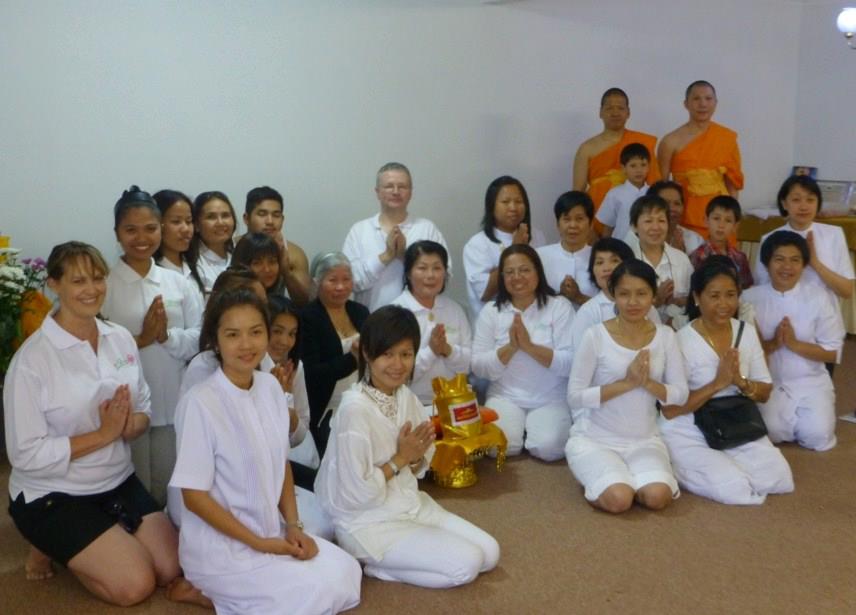
The event was not only to celebrate the achievement of the temple of the past two years but it is to recognise and express their gratitude to the great support of the community who have been there all the way with them. Without the support, they will not be able to come to this day.

P1000953

The celebration was on Sunday 25th November 2012, four days after the exact date 2 years ago when the new team of monks from Sydney held the first opening ceremony on the 12th month of the lunar calendar – 21st November 2010. It has been a long hard road for the team to rebuild the reputation and promote the temple to the local community. They have overcome many obstacles and now the temple community is growing continuously.

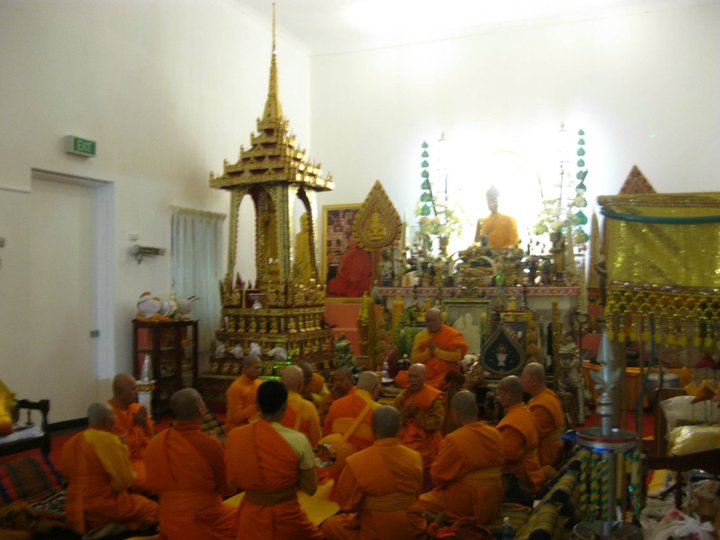
The celebration was the combination of the normal Sunday service, meditation guide, dhamma talk, certificate presentation, free lunch and live music, and a special robe offering ceremony in the afternoon. The Buddhist followers from Melbourne have organised this robe offering to support the work of Wat Albury.

The full capacity of the temple hall was stretched to the maximum that day, even the walkway was filled up with the late comers.

P1000981

The formal speech to remark the cerebration was made by Ajahn Satit during the morning session. He has highlighted and summarised the incidents, obstacles and difficulties that the temple has gone through this past two years. From the very humble beginning with only three or four attendants for the service to be a full house most weeks of the month, from a well equipped for the service and household maintenance to be stripped of all equipments and tools, through twice broken in, by thieves, but determination prevails as Ajahn Satit mentioned in the speech that he has a great teacher who teaches him that

“We do not ask why people don’t come to the temple. We only look at making temple a good place for people to come. We have to develop good place, good food, good friends and good dhamma.”

Sue Hamilton, who joined the community in February 2012 reveal to our reporter.

“I remembered when thieves took lawn mowers and other equipment earlier in the year. When Ajahn told us at the Sunday service after the second theft that the temple was going to donate all other items of value to charity to demonstrate our tolerance and kindness, I remember how proud I was that I was now part of this generous community.”

P1010021

The celebration was enjoyed by all on the day. Local people were joined in this event by many out-of-towners from different cities and towns like Sydney, Melbourne, Wangaratta, Myrtleford, Henty and Shepparton, as Albury temple was the only Buddhist temple in this area of 200km radius. Albury-Wodonga was not a cultural diversity area like other big cities. Hence, the photos of the temple activities each week that shows more Australian attendants than the Asian ones, have amazed many who have never thought this could happen in a conservative country town in Australia.

To follow the activities of the temple in Albury please visit

http://www.facbook.com/WatAlbury

Posted in Local News | Tagged , , , , , , , , , | Leave a comment

Protecting the Buddhist historic site in “Mes Aynak”

“There is a magic to Mes Aynak — an ability to draw in people from around the world who will risk their lives to save it.”
Brent Huffman

Over 300 citizens in Thailand protest the imminent destruction of the ancient Buddhist city at Mes Aynak.

“Archaeologists are rushing to salvage what they can from a major seventh century B.C. religious site along the famed Silk Road connecting Asia and the Middle East. The ruins, including the monastery and domed shrines known as “stupas,” will likely be largely destroyed once work at the mine begins” HEIDI VOGT (http://www.huffingtonpost.com/2010/11/14/chinese-copper-mine-afghanistan-mes-aynak-_n_783315.html?utm_hp_ref=fb&src=sp&comm_ref=false)

Wat Albury is asking for help in signing the petition to protect the Buddhist historical site in “Mes Aynak”

“We support the online petition created by Association for the protection of Afghan Archaeology(APAA)”

If you like to take part in this protection of this historic site please sing this petition at

http://www.apaa.info/index.html

or

http://www.change.org/en-AU/petitions/save-our-past-ask-unesco-to-include-mess-aynak-on-the-list-of-endangered-sites

and

http://www.change.org/petitions/president-hamid-karzai-prevent-destruction-of-ancient-site-of-mes-aynak-the-environmental-damage-3

Other news links

http://www.nationmultimedia.com/national/Buddhists-plea-with-UN-to-prevent-mining-at-Mes-Ay-30194225.html

http://www.washingtonpost.com/blogs/worldviews/wp/2012/11/08/a-kickstarter-campaign-for-an-ancient-site-in-afghanistan/

http://www.sueddeutsche.de/wissen/afghanistan-buddhistisches-heiligtum-vor-der-zerstoerung-1.1521811

http://ireport.cnn.com/docs/DOC-880820

Posted in National Buddhist News | Tagged , , , , , , | Leave a comment

Bringing knowledge to life

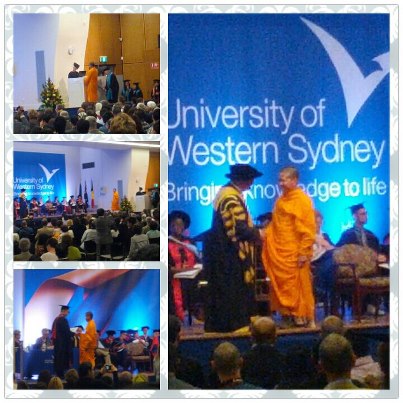
The afternoon of Tuesday 25th September, many members of a Buddhist temple came together, to witness and congratulate Ajahn Satit, one of their teaching monks, on his success in Master of Professional Communication(MPC) at the UWS Parramatta campus where the graduation ceremony was held.

Under the code of conduct for Buddhist monks, he cannot be in the graduation regalia. After a lengthy discussion at the registration desk, he went on the stage and proudly received the degree in his saffron robe.

“UWS is one of the most culturally diverse universities in Australia with more than 100 cultural and ethnic backgrounds represented in our student community and over 20% of staff coming from culturally and linguistically diverse backgrounds”
stated UWS on its website.

Despite the heavy load of his duties and commitments to serve Buddhist community, Ajahn Satit still kept the right balance of his part time study and the temple work.

“I really like the slogan ‘Bringing knowledge to life’, the knowledge I gained from the course, I applied to my work directly” said Ajahn Satit.

He emphasises that good communication skill is needed, not only for the media people but it is also very useful for moral teachers. They have to understand and be able to influence the society towards a better direction.

In 2011, half way through his study in this course, Ajahn Satit was unexpectedly moved to Albury to challengingly re-open a small Buddhist temple. He took that challenge by turning the crisis into opportunity and put the knowledge into practice. He used the communication strategy in the re-opening of this temple as his Project II in the MPC course. The successfulness of the project does not only give him a good grade but it also gives happiness to many Buddhists who enjoy the services of the Albury Buddhist temple.

The coming Sunday 30 September, members of the Albury temple are awaiting to congratulate and celebrate with him on his success in the MPC.

“A fantastic celebration, of what he have been able to do for us personally and the community” said Gary, the Buddha Shop, Albury.

Reporter: Sunisa Clapin

Posted in Local News | Tagged , , , , , , , , | 3 Comments

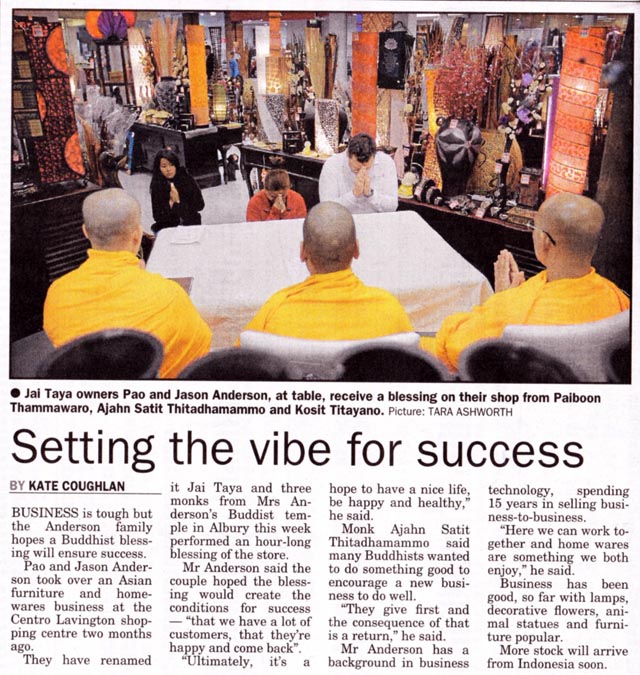
Business owners call for shop blessing

In today competitive world, business owners try to come up with new unique products or services to make the business distinguish from others in order to  keep it flourished, especially the new small business owners, who perhaps invest their entire life saving money into the business. It may be an exciting challenge for them on one hand but on the other, the worrying of losing everything is also presence.
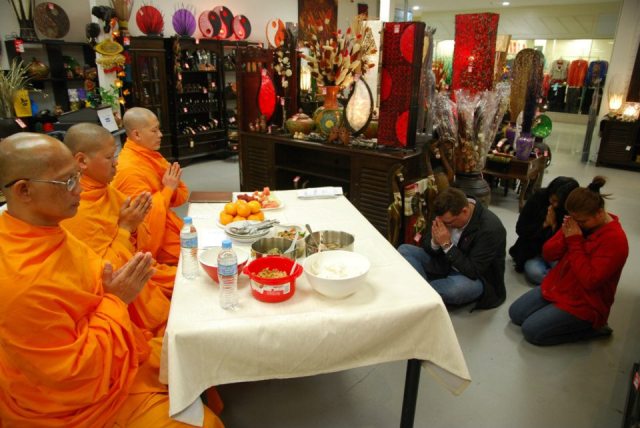
Shop Blessing, Great Aunty Three, Newtown, NSW (17 August 2012)

Great Aunty Three http://www.smh.com.au/entertainment/restaurants-and-bars/street-credibility-20121001-26uwi.html

In Buddhist countries like Thailand and Sri Lanka, some significant changes in the Buddhist lives such as moving into a new house, starting a new business or move into a new office used to initially involve some merit-making – shop blessing or house blessing from Buddhist monks for their peace of mind. It is also a good opportunity to invite friends and family members to join in the activity which can help strengthen the bond with them as well. This blessing and merit-making used to be a must do activity in the old days but in this modern day, it seems to be forgotten. Maybe it is time to bring back this tradition as a way to help people find happiness in life. 
Buddhists believe in the law of nature or the law of Kamma. We receive good outcome from the good cause we made in the past. Thus, the business owners will make a great merit before they start the business and wishing that the fruitful of the merit will support them and protect them from the bad things. One way of making merit is to give or practice generosity. To give to a person with or practicing himself towards having the pure mind, the merit gained will be greater. Buddhist monks who focus on developing their mind are the field of merit for lay people. Therefore, the business owners will invite monks to come to accept their offering and give them blessing for their new business.
Shop Blessing, Aloi Thai Restaurant, Shepparton, VIC (19 August 2012)

In the western country this thing must be adapted, however it has to remain the high value and the same principle. “In conducting the blessing ceremony in Australia we should make it in the understandable way for all audiences.” Ajahn Satit said
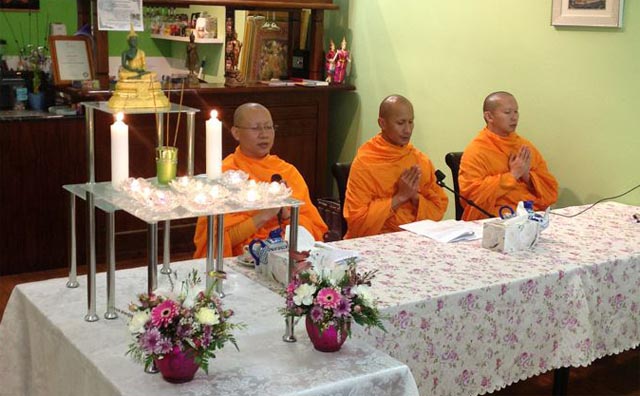
The general program for the shop blessing will include, meditation, Dhamma talk in related topics, requesting five precepts and Sangadana Offering. After the offering have been made, the monks will give the blessing in Pali language at the end, the monks may give something to remind them for the practice of the Dhamma.
The Border Mail p.21, 22 August 2012

English translation of the blessing.

Jayaman Gala Gatha (Pahung)

This is about the Stanza of the victorious auspices, recounting instances that the Buddha overcame obstacles by using different techniques:

1st Stanza: The conquest of Mara and his army through the power of generosity

Once upon a time the king of Mara (evil) who manifested himself as a being riding a gigantic elephant, Girimekla, The fierce Mara with thousands arms holding weapons together with his army came to the Buddha with the intention to harm the blessed one who conquered them through the power of his perfection of generosity. Through that power may there be auspicious victory to you.

2nd Stanza: The defeat of the vicious and ferocious ogre Yakka Allavakka through the perfection of endurance

Another time there was an ogre, Yakka Allavakka, who was more malicious and more powerful than the king of evil (Mara). He had contended with all his might to harm the Lord Buddha all night until dawn. The Blessed one overpowered him with his perfection of forbearance. Through that power may there be auspicious victory to you.

The 3rd Stanza: The victory through the power of loving and kindness

Next, Phra Devadhatta betrayed the Lord Buddha by arranging for a fully drunk, Naragiri elephant to harm the Blessed one. The elephant is ferocious like the forest on fire, strong as thunderbolt.  The Lord Buddha overcame it through the power of his loving and kindness. Through that power may there be auspicious victory to you.

4th Stanza: The conquest of the noxious robber through Miraculous Psychic power

Once upon a time the Lord Buddha had overcome the robber Gulimala who was advised by his master that if he killed 1000 people and made a garland with 1000 fingers, he would become the most powerful person. He killed 999 people and came across the Buddha. He thought to himself that he only needed one more finger. The Lord Buddha won over the robber who was chasing him up on a long road (48km) while holding a sword with an intention to kill the Blessed one. With his miraculous power the Lord Buddha weakened the thief who later asked to be ordained as a monk. Through that power may there be auspicious victory to you.

5th Stanza: The Lord Buddha’s victory through serenity and control

Once upon a time Jinjamanvica, enlarged her belly with firewood to make herself look pregnant. She accused the Lord Buddha in the midst of a large crowd. The Lord conquered this accusation with his tranquillity and control. Through that power may there be auspicious victory to you.

6th Stanza: Victory of the Buddha on the debate with Sacca Nikron acetic through his light of wisdom.

Once upon a time the Lord Buddha won upon a debate with an ascetic, Sacca Kanikron who tends to disregard the truth. He hankered after arguments like a banner. He is fully blinded (to the truth). Knowing the ascetic’s persona, the Lord Buddha overpowered him with the light of wisdom and expounded the teaching. Through that power may there be auspicious victory to you.

7th Stanza: The victory of the Buddha over the malicious king of serpent through the power of his disciple.

Another time the Lord Buddha allowed his great disciple, Phra Maha Mogallana, to defeat the tricky king of serpent, Nanthopa Nanda. Phra Maha Mogallana with his magic power turned himself into a Serpent king and tortured Nanthopa Nanda. Through that power may there be auspicious victory to you.

8th Stanza: the conquest of the arrogant and egocentric Paka brahman

This is an episode when the Lord Buddha conquered the powerful self-opinionated Phaka Brahma, who with the wrong views believed that he is endowed with spiritual purity. Through the Lord Buddha’s greater power of wisdom and teaching he won over Phaka Brahma. Through that power may there be auspicious victory to you.

Maha Jayamangala Gatha(Mahaka)

The Lord Buddha who is the supreme refuge of all beings, had been pursuing all perfections out of compassion for all beings. He had attained the highest enlightenment. With this truth may I be blessed with all the blessings.

May I be victorious through this blessing ceremony. May it be comparable to the joy that the Lord Buddha brought to the Sakaya clan with his supreme victory over the king of evil while meditating under the Bodhi tree.

The Lord was experiencing the bliss with his perpetual victory while sitting on a throne, Ajjitta, at Pokara pataphee. This is the practices of all Buddhas.

May, the sponsor who organises this auspicious ceremony at the right time, with righteous effort, even for a short time, who pays homage to the monks who are pure and virtuous in speech, mind and actions, be happy and prosperous.

May I be endowed with all the blessings.

May all celestial beings protect me.

May I be blessed with the Buddha’s power for ever never.

May I be endowed with all the blessings

May all celestial beings protect me.

May I be blessed with the Dhamma’s power for ever never.

May I be endowed with all the blessings

May all celestial beings protect me.

May I be blessed with the Sangha’s power for ever never.

Posted in Local News | Tagged , , , , , , , , , , , | Leave a comment

Where should we put Buddha-images?

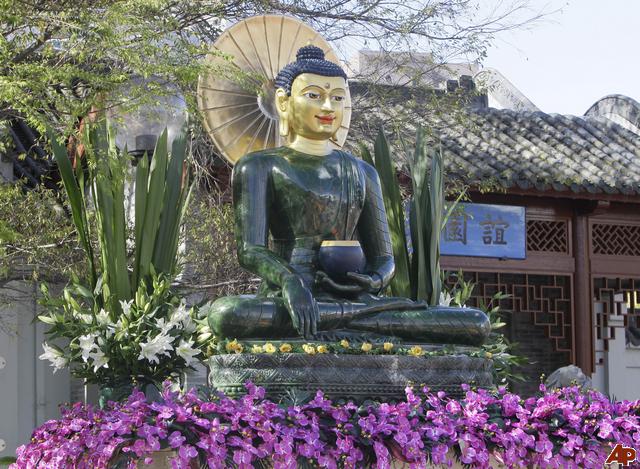
These days you might see Buddha-images in many places, restaurant, café, living room or in the garden. This could be common to the non-Buddhists. Some may not know why we create Buddha-image? Perhaps, they think that the Buddha-images are the symbol of peace and wisdom.
Some legend said that the first Buddha image was created since the Buddha time. King Kosala had the Buddha statue made when the Buddha was away visiting his mother in heaven. The King paid respect to the statue as if he did to the Buddha himself. Even though this is one of “the legend has it”, it implies that the Buddhists create Buddha image as the representation of the Buddha and to worship his virtues and his teachings. This is the main purpose to create the Buddha images.

Now, 2,600 years after his enlightenment. Without the Buddha images it will not be easy to remind us of the great teacher with great purity, wisdom and compassion.

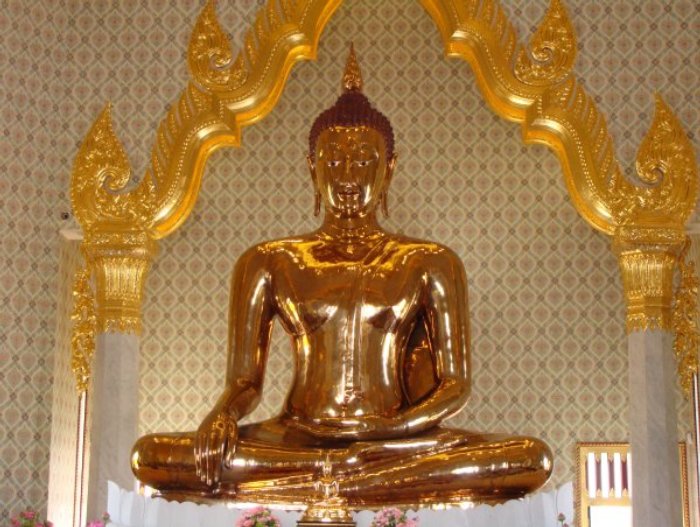
The Golden Buddha, Wat Trimit, Bangkok, Thailand

In each Buddhist temple, they try to make the atmosphere as if the Lord Buddha is still alive. The temple  is combined with three main places, the Buddha, the Dhamma and the Sangha places. The Budda place is where the Buddha resides usually in the main chapel. The big Buddha image will be there. Buddhists will make their best effort to make the Buddha image with the best material they can afford. Gold is the most valuable material that people can find and many gold Buddha images can be found in many Buddhist countries. It is the token of their highest gratitude and respect to the Buddha.

The monk ordination ceremony have to be performed in the chapel with the presence of the Buddha(The Buddha-image) .

The ceremony of the monks, for example, monk ordination ceremony have to be performed in the chapel with the presence of the Buddha (The Buddha-image) and the Sangha. The Dhamma teaching to the general public is done in the Dhamma Place or Dhamma Sala (Hall). The Dhamma place also has a Buddha-image as the president in sharing the Dhamma. However a monk will take the duty to give the Dhamma. It can be noticed that the monk who will give the Dhamma will firstly pay homage to the Budda with the following chanting.

“NAMO TASSA BHAGAVATO/

I wish to revere with body, speech and mind that Lord apportioning Dhamma/

ARAHATO/

That One far from defilements/

SAMMA-SAMBUDDAHASSA/

The One Perfectly Enlightened by himself.”/

Repeat it three times.

The monk who gives the Dhamma talk is a communicator who relays the Dhamma, that the Buddha discovered and taught during his life time, to the audience in Dhamma Sala.

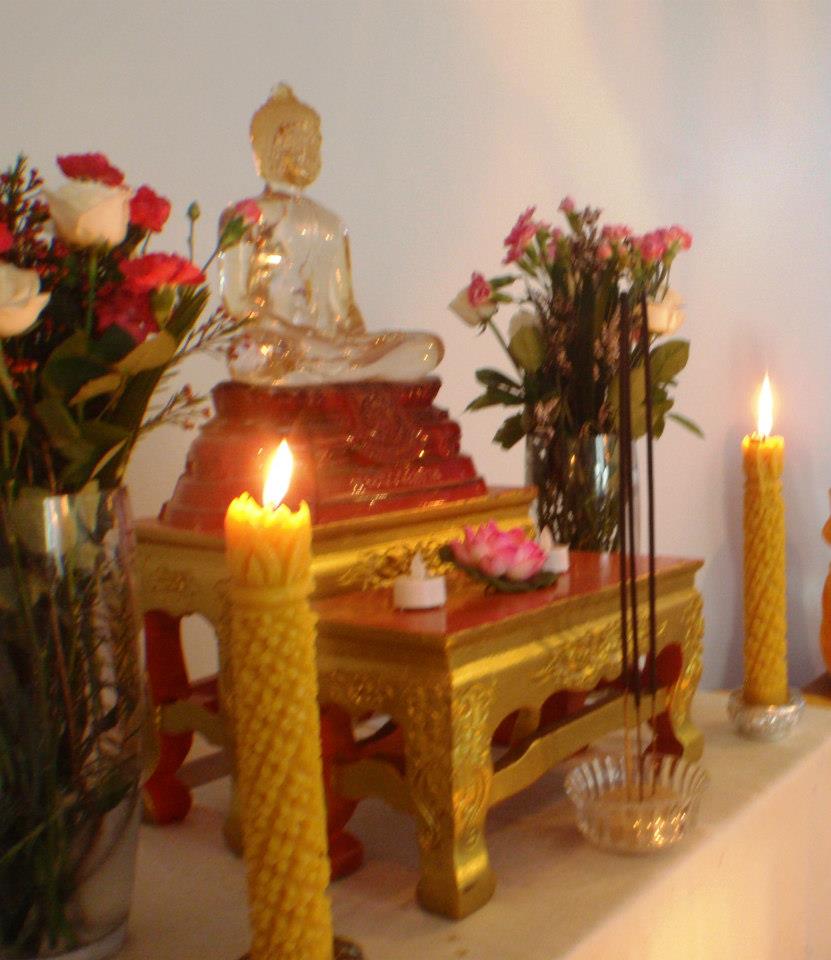
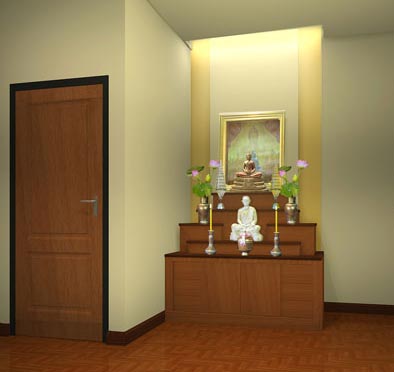
For many Buddhists that cannot come to the temple regularly, or have no access to the temple at all, a Buddha image, even a small one, will be the best thing they could wish for in their home. It will make them feel that they are close to the Buddha. They will select the best spot, and display the Buddha image in the place of respect. If possible they may dedicate one whole room to be a shrine or a meditation room. When they enter this room the atmosphere would help them to be calm and peaceful. It helps to prepare them to be ready to practice the Dhamma such as chanting and meditating without any distraction.

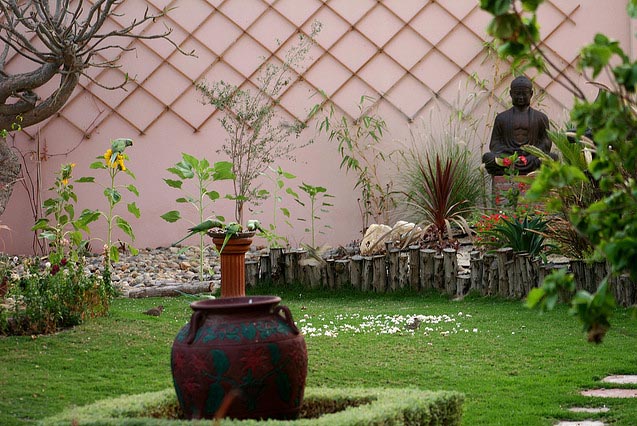
Many westerners may put the Buddha in the garden, they can adjust it in the right place as well by raising it in a higher place and they can arrange that area to be a sitting place to purify their mind by meditating in front of the Buddha. By seeing the Buddha image could remind people to look and find their own Buddha with in themselves.

We hope this article could assist both Buddhists and Non-Buddhists who want to have Buddha-images at home or at their shop would use the image in the right purpose and put the Buddha image in the respectable place.

Posted in Dhamma Stories | Tagged , , , , , , , , , , , | 1 Comment

‘Buddhajayantee’ – the 2600th anniversary of the Buddha’s enlightenment.

2012 is a significant year for all Buddhists as it marks the ‘Buddhajayantee’ – the 2600th anniversary of the Buddha’s enlightenment.

On Sunday 29th July, Belmore Park, Sydney CBD, was transformed into a Buddhist ceremonial ground for the gathering of hundreds of Thai Buddhists for the ceremony of the start of this year Buddhist lent (Pansa or Vansa).

The event was organised by the Thai Buddhist Student Association Inc. with the strong support of Phrakru Palad Nayokworrawat (Most Venerable Suddhammo), the Abbot of Wat Phra Dhammakaya Sydney and the hard work of all volunteers also make this event possible.

The sound of traditional Thai music played by student of the 60TH Dhammachai Education School started early and filled the atmosphere with pleasure and calmness for all participants and the passers-by.

The ceremony began around 9.30am by the Most Venerable Suddhammo who led the audience to pay respect to the Triple Gem. He, then, gave the brief introduction of the significance of the day that it was not only the traditional ceremony for the start of the Buddhist lent, it was also a rare opportunity for the Buddhists in Sydney to pay respect to the historical Buddha’s relic from Thailand. The relics were discovered in India and were given to the King Rama V of Siam (Thailand) by the British-Indian government at the time. Part of the relics was kept at the well-known Cetiya called Pukhowtong at Wat Saket, one of the tourist attractions in Bangkok.

With the kindness of Somdet Phra Puttajarn, the chairperson of the Supreme of Patriarch’s Representative Committee, the Abbot of Wat Saket had entrusted Prakru Palad Nayokworrawat to bring the holy relic to Australia for the Buddhist here to pay respect and gained blessing in this significant year of Buddhajayantee.

The event was officially opened by Mrs Kasinee Phalanuwong, the Deputy Royal Thai Consulate General, Sydney. Then the procession to bring the Buddha’s relic came in to the ground led by the group of Buddhajayantee flag-bearers followed by rows of lay people holding candle light offering. The procession went towards the temporary cetiya at the centre to the ceremony where the relic will be placed, and walked around it three times then the relic was placed in the cetiya by the Sangha.

Most Venerable Sudhhammo led the audience for a meditation time for their clam and clear minds. After the meditation, the offering of Pansa candles and Sangha Dana were presented by four representatives of the congregation. The Sangha received the offering and gave blessing.

The second part of the ceremony was followed, where lines of peoples waited enthusiastically for the monks as they slowly passed each person to receive their alms offering (Takbat). That was the conclusion of the morning ceremony.

The monks remained at Belmore Park to give people the opportunity to offer Sangha Dana for the whole afternoon.

The Buddhajayantee candle light ceremony started again around 4.00pm with more than a hundred Buddhists had joined. Most Venerable Suddhammo led the Buddha Puja chanting followed by meditation time. When everyone mind was clear, all the candles were lid.

Most Venerable Suddhammo led the Sangha and the congregation to pay respect to the Buddha’s relic by walking around the cetiya three times. When everyone came back to their seat, most Venerable Suddhammo led them in merit dedication to all beings and that concluded the evening ceremony.

Posted in National Buddhist News | Tagged , , , , , , , | Leave a comment

The Expo

On Saturday 7th, July 2012, the Health and Body Expo was held at the SS&A Club, Albury. Donna Carroll, the main co-ordinator of the Expo said that she was very excited about this as it was the first time for this kind of event in this area. The event received a lot of support from many related local businesses.

The Buddha Shop Albury was one of the exhibitors with a fair size space for its exhibition. It also allocated a table space to the local Buddhist temple to display their information in this expo as well. This gave the visitors the opportunity to talk to the Buddhist monk and get to know their local Buddhist temple.

The opening was remarked by the Buddhist blessing by Most Venerable Sudhammo, the president of Buddhist Federation of Australia and Ajahn Satit of Albury Buddhist temple. The exhibitors and participants were so pleased of their presence. 

Ajhan Satit would like to thank the local Buddhist community for their continuous and great support and also to the people who came with the open minded. He also revealed to our reporter that this expo had helped him to better understand the perception of the public here toward Buddhism, “I think it is still a big challenge for our local Buddhist community to educate the public about the Buddhist practice and the Buddhist value. I can see some people look at the Buddhist monk as a religious figure who is trying to convert them and they try to keep away. It is not like that at all. Buddhist practice and value is something that anyone can put into practice in their everyday live without having to call themselves a Buddhist.”

Never the less, there were many people who collected some info on the day and perhaps find some time to visit the temple.

Posted in Local News | Tagged , , , | Leave a comment